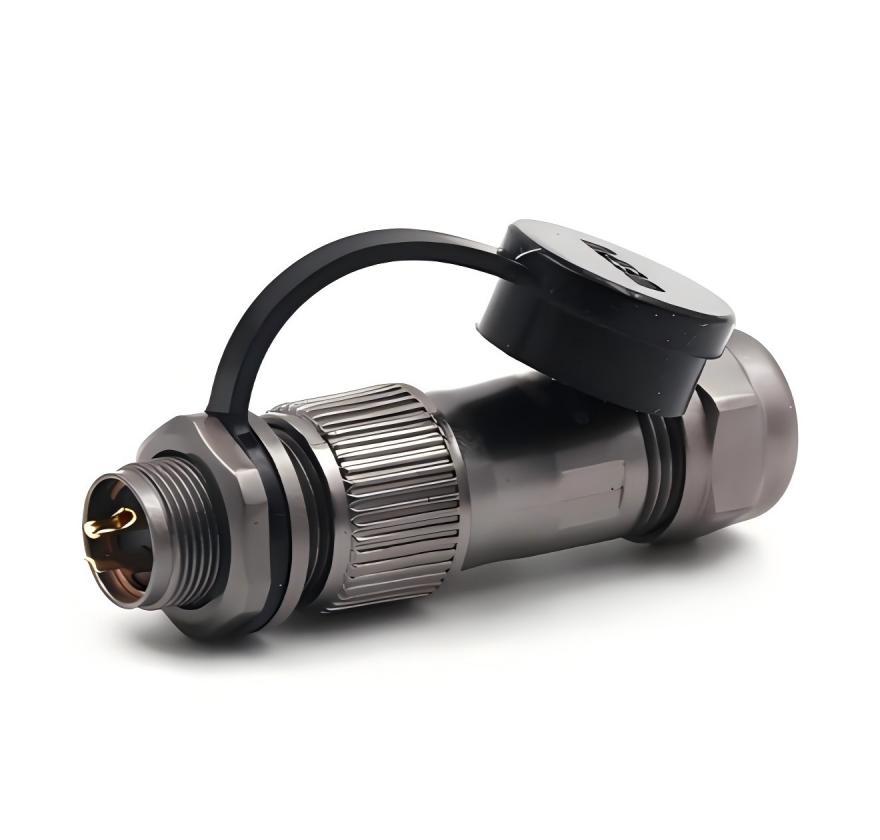
GX12 Aviation Connector
BNC Connector Selection: What to Check Before You Specify
When you need a bayonet-style RF connector for video surveillance, test equipment, or industrial instrumentation, the BNC interface is a common choice. But choosing the right BNC connector involves more than matching the plug to the jack. This guide focuses on the key electrical, mechanical, and environmental factors that determine whether a BNC connector will perform reliably in your specific application.
Core Decision Points for BNC Connectors
Before you finalize a BNC connector part number, verify these five parameters against your system requirements:
-
Impedance rating: BNC connectors are typically available in 50 Ω or 75 Ω versions. Using the wrong impedance in a high-frequency application causes signal reflections and attenuation. Confirm which impedance your system requires.
-
Frequency range: Standard BNC connectors are generally specified up to 4 GHz for 50 Ω types, but the actual limit depends on the connector construction and cable type. Check the manufacturer's data sheet for the specific frequency limit of the connector you intend to use.
-
Cable interface and termination: BNC connectors are available for crimp, solder, or twist-on termination. The connector must match the exact coaxial cable type (e.g., RG58, RG59, RG174) to ensure proper mechanical fit and electrical performance.
-
Environmental sealing: Standard BNC connectors are not waterproof. If your installation is outdoors or in a washdown area, you need a sealed or IP-rated BNC variant, or a protective enclosure. Verify the IP rating of the specific connector model.
-
Mechanical retention and mating cycles: The bayonet coupling provides quick connect/disconnect, but repeated mating cycles can wear the coupling mechanism. For applications with frequent connections, check the rated mating cycles and consider the durability of the plating.
Understanding BNC Connector Types and Configurations
BNC connectors are not a single product family. They come in several configurations that affect how they mount and connect:
-
Plug vs. jack: The plug is the male connector typically found on cable ends; the jack is the female connector mounted on a panel or device. Ensure you specify the correct gender for each end of the connection.
-
Cable mount vs. panel mount: Cable-mount connectors attach to the coaxial cable, while panel-mount connectors are fixed to a chassis or bulkhead. Panel-mount types often have a flange or a threaded barrel for secure installation.
-
Straight vs. right-angle: Right-angle BNC connectors are useful in tight spaces where a straight connector would put excessive strain on the cable or interfere with adjacent components.
-
Standard vs. precision: Precision BNC connectors offer tighter impedance control and lower VSWR for demanding RF applications, but they are more expensive and may require specialized cable preparation.
Electrical and Environmental Limits: What the Data Sheet Means
When reviewing a BNC connector specification, distinguish between the rated values and the conditions under which they are tested. For example, a connector may have a rated voltage of 500 V, but this rating assumes a specific altitude, humidity, and mating condition. In practice, you should derate the connector for continuous use or harsh environments.
Similarly, the contact resistance and insulation resistance values are measured under controlled laboratory conditions. These values can change after exposure to vibration, temperature cycling, or contamination. If your application involves high vibration or extreme temperatures, request test data from the manufacturer that simulates your operating environment.
Installation and Maintenance Considerations
Proper installation is critical for BNC connector performance. A poorly terminated connector can cause intermittent signals or complete failure. Follow these practical guidelines:
-
Use the correct tooling: Crimp connectors require a specific crimp die for the cable type. Using the wrong die can deform the connector or damage the cable braid.
-
Inspect the center pin: The center pin must be properly seated and free of burrs or solder flux. A damaged pin can cause poor contact and signal loss.
-
Check the coupling torque: Tighten the bayonet coupling until it locks securely. Do not overtighten, as this can damage the coupling threads or the mating jack.
-
Plan for strain relief: Support the cable near the connector to prevent flexing and pulling that can stress the termination point.
Application Fit: Where BNC Connectors Are Used
BNC connectors are widely used in applications that require a reliable RF connection up to a few gigahertz. Common uses include:
- CCTV and video surveillance systems, where 75 Ω BNC connectors are standard for analog and some digital video signals.
- Test and measurement equipment, such as oscilloscopes and signal generators, where 50 Ω BNC connectors are common.
- Industrial instrumentation and control systems that transmit analog or digital signals over coaxial cable.
- Networking equipment for legacy 10Base-2 Ethernet, though this is less common today.
For a specific example of BNC connectors in a real-world surveillance deployment, see this BNC RF connector case study for CCTV systems in Chile.
When a BNC Connector Is Not the Right Choice
BNC connectors have limitations. If your application requires any of the following, consider an alternative connector type:
-
Higher frequency operation above 4 GHz: SMA or Type N connectors offer better performance at microwave frequencies.
-
Waterproof or IP-rated connections: Standard BNC connectors are not sealed. Look for a specialized waterproof BNC or use a different connector family with a threaded coupling and sealing gasket.
-
High-density or multi-pin connections: BNC is a single-conductor coaxial interface. For multiple signals, consider a multi-pin circular connector.
-
Applications requiring high mating cycle durability: The bayonet coupling is convenient but not as robust as a threaded coupling under repeated connect/disconnect cycles.
How to Prepare Your BNC Connector Inquiry
To get an accurate quotation and technical recommendation, have the following information ready when you contact a supplier:
- Impedance required (50 Ω or 75 Ω).
- Coaxial cable type (e.g., RG58, RG59, RG174, RG213).
- Connector configuration (plug or jack, cable mount or panel mount, straight or right-angle).
- Termination method preferred (crimp, solder, or twist-on).
- Environmental conditions (indoor/outdoor, temperature range, exposure to moisture or chemicals).
- Frequency range and signal type (analog video, digital data, RF).
- Quantity and any specific certification or compliance requirements.
If you are comparing BNC with other RF connector types for a specific instrument, you may find this FAQ on BNC vs. SMA for oscilloscope probes helpful.
Next Step: Verify Your Connector Choice
Once you have confirmed the electrical and mechanical parameters, the next step is to verify the specific connector model against your cable and application. Review the manufacturer's datasheet for the exact dimensions, materials, and test data. If you are unsure about any parameter, request a sample for testing before committing to a full production order.






 Tel: +8619924482730
 Email: info@kmydconnector.com
 MP/WhatsApp: +8619924482730
 Manufacturer Address:Baoan District, Shenzhen City, Guangdong Province,China