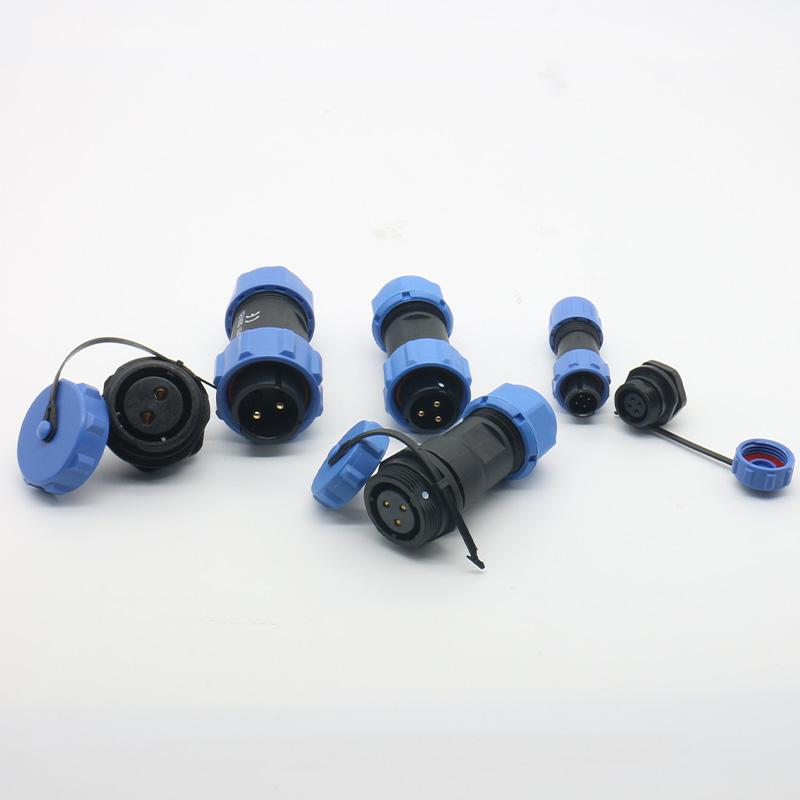
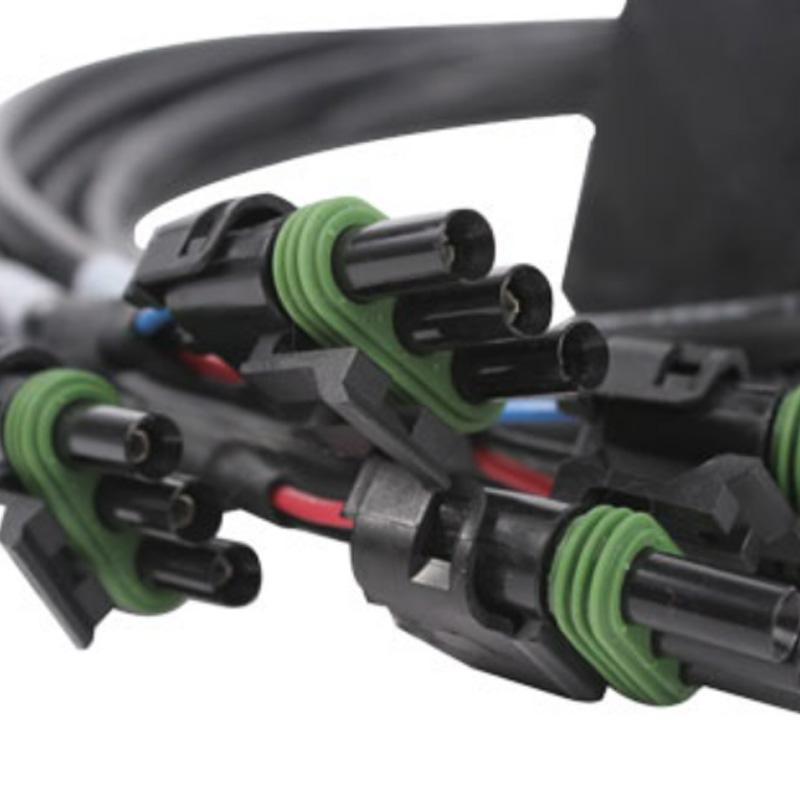
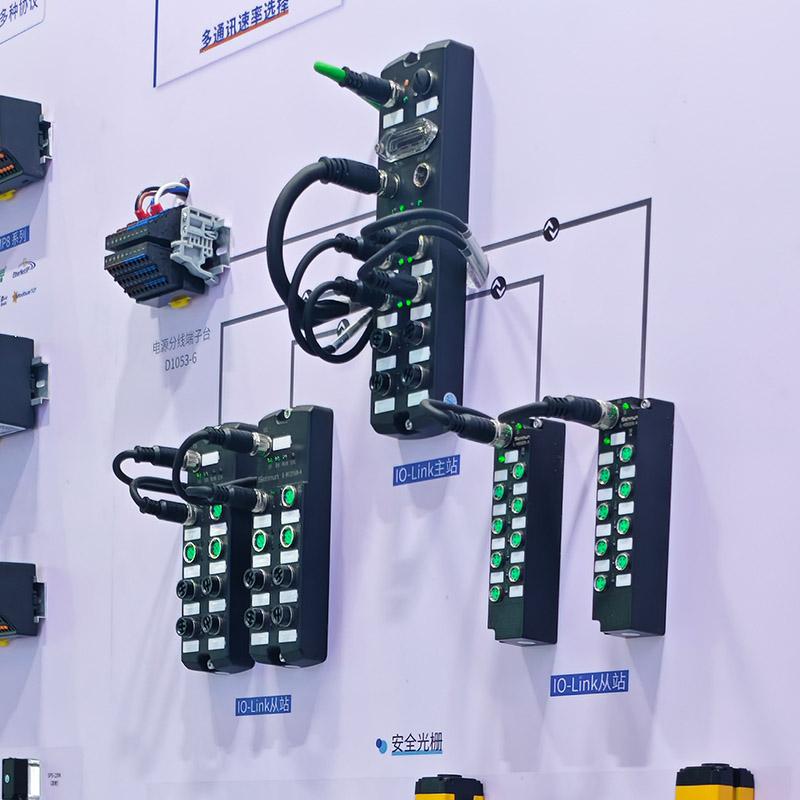
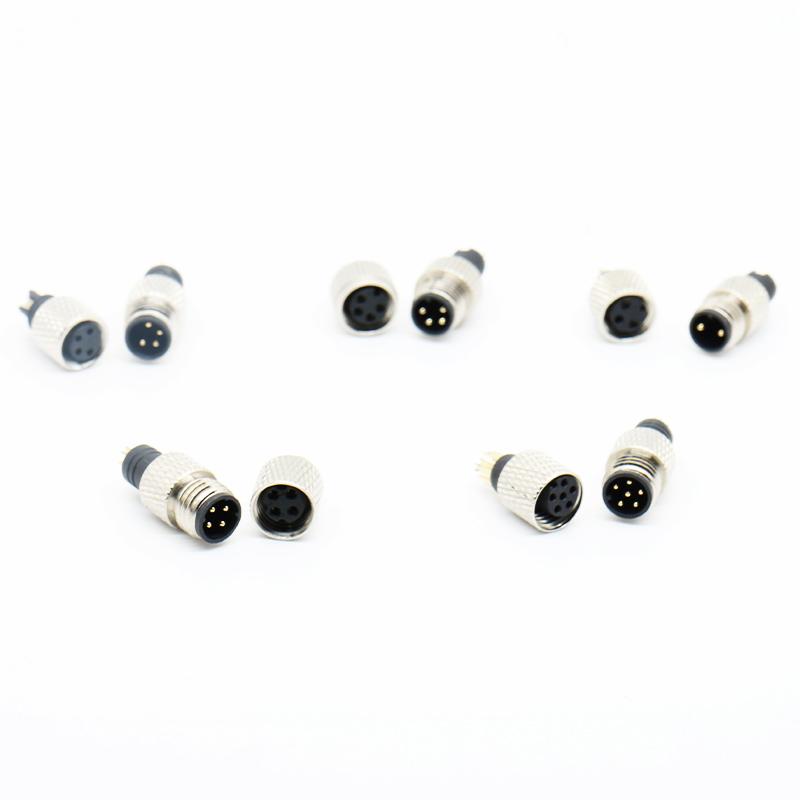
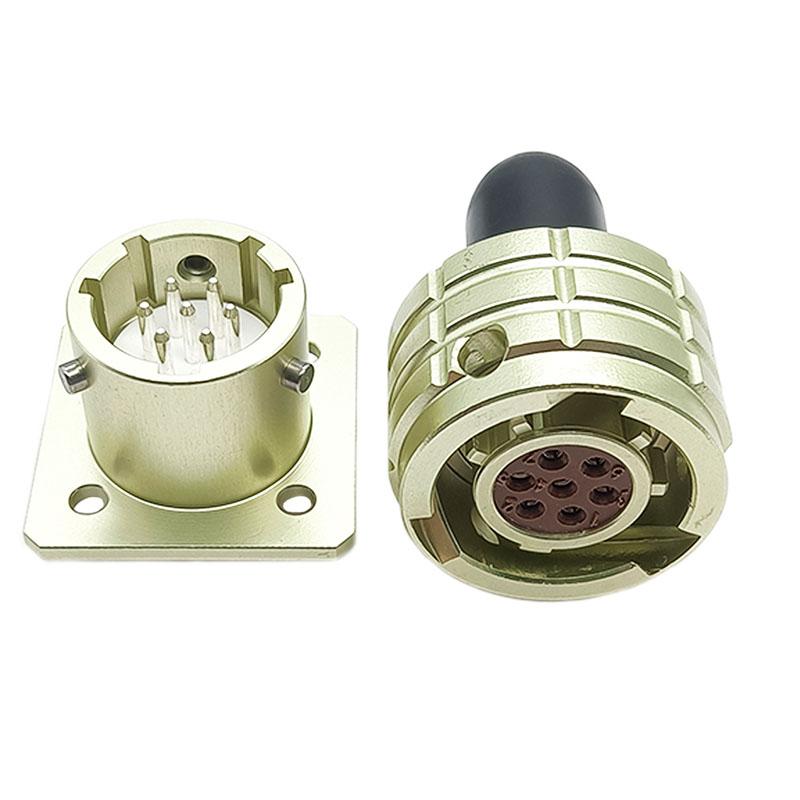
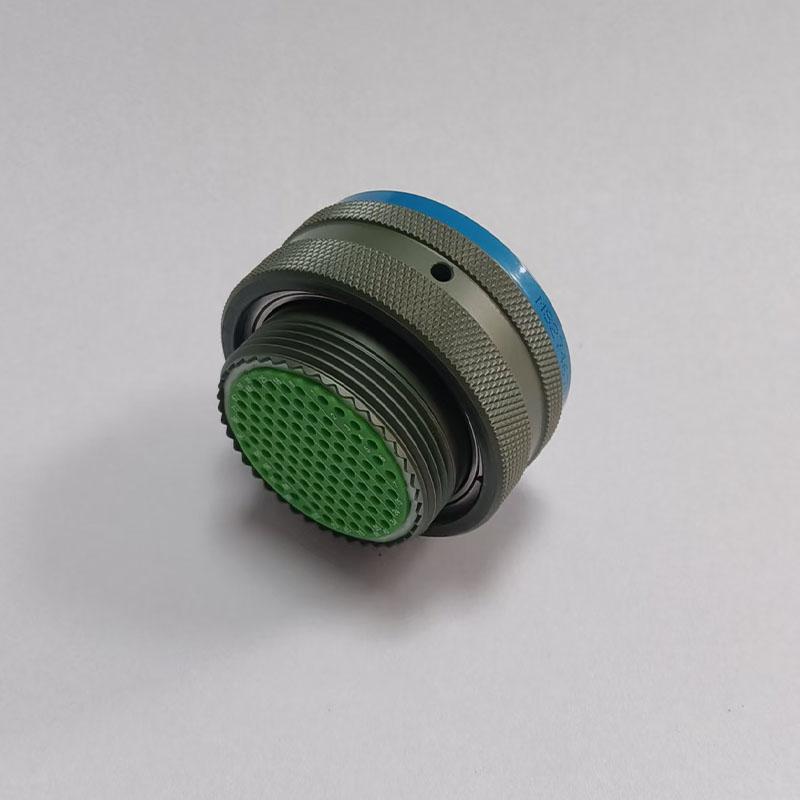
Automotive connectors are core components for electrical connection and signal transmission in vehicles, specially designed to resist high temperature, vibration, electromagnetic interference, and humidity, adapting to the harsh operating environment of automotive engines, cabins, and chassis. Our KMYD automotive-adapted connectors include M series (M8, M12, M16, M23 connectors), SP/SD/LD/FD series (SP13, SD15, LD20, FD25 connectors), and RF connectors (SMA, N-type connectors), all optimized for automotive scenarios and widely applied in passenger cars, commercial vehicles, new energy vehicles (NEVs), and special vehicles, complying with strict automotive industry standards and reliability requirements.
1. Application Scenarios
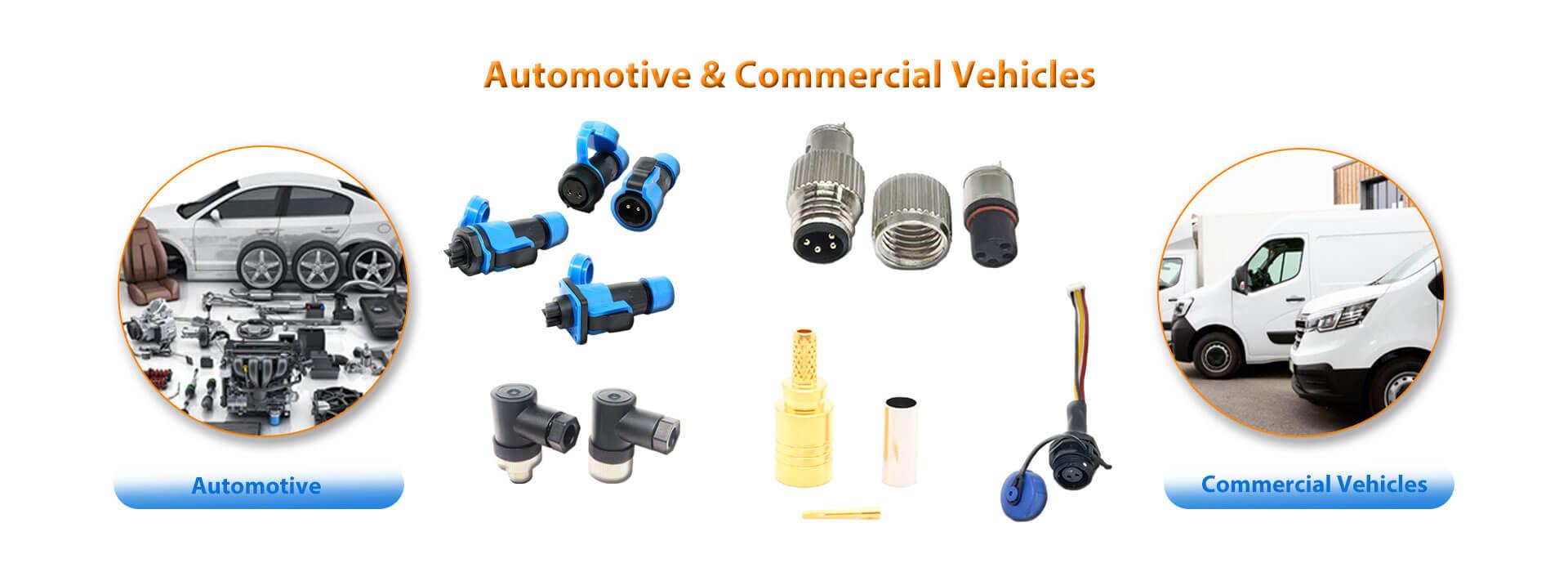
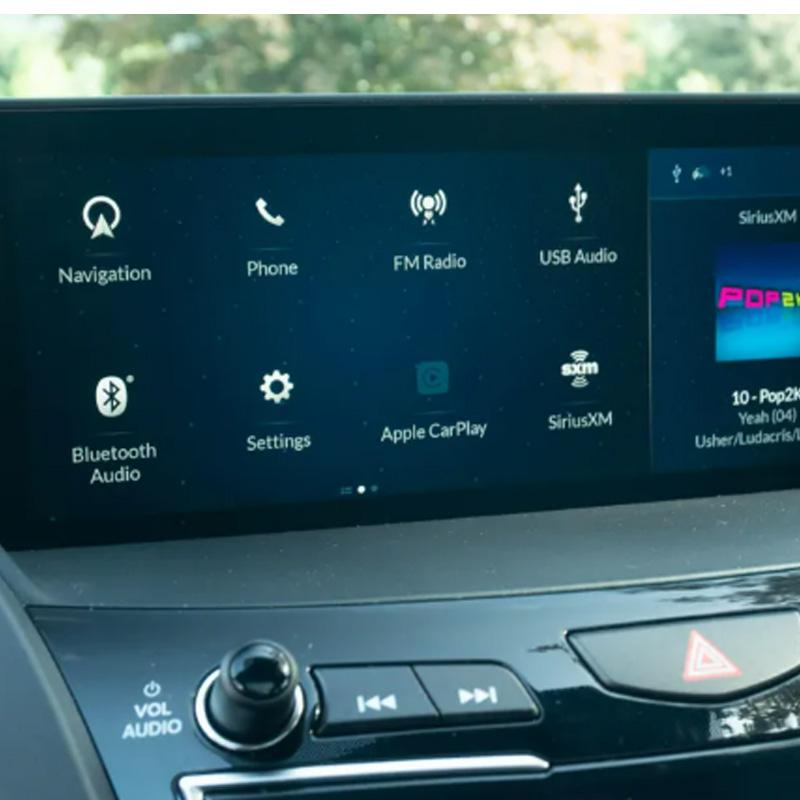
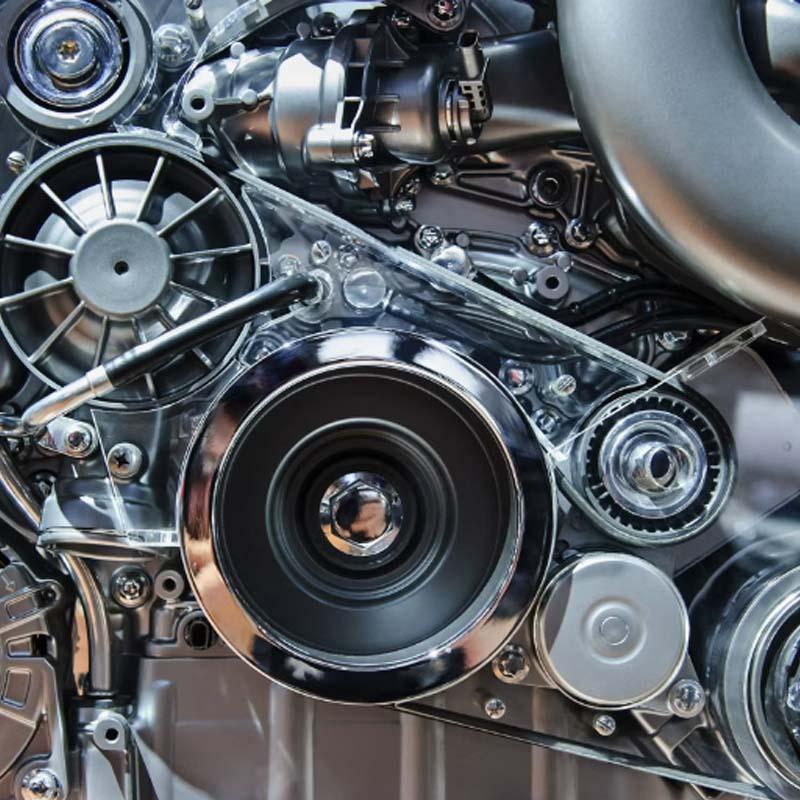
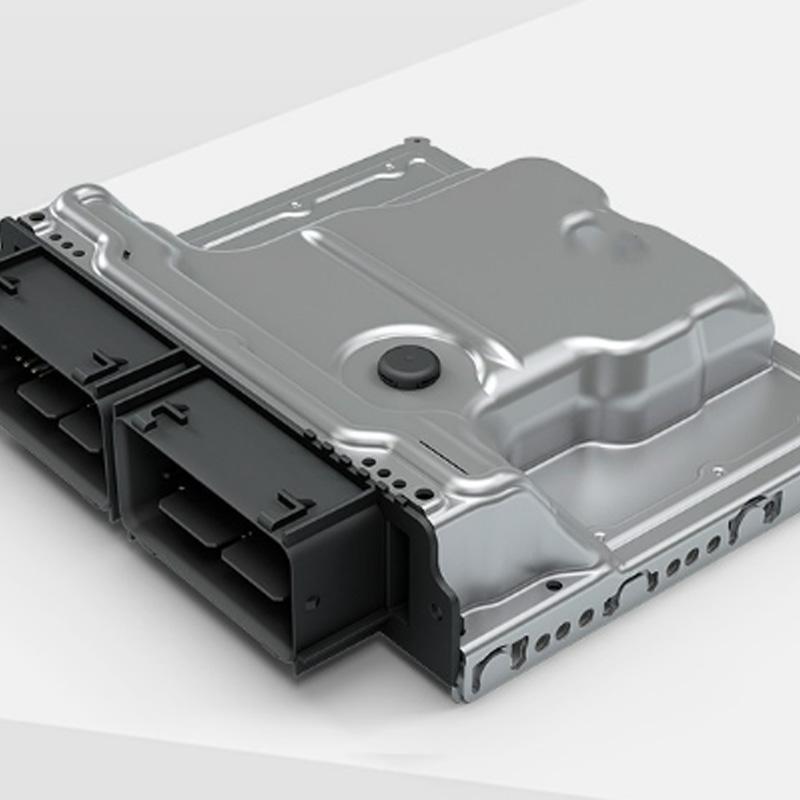
Passenger Cars (engine compartment, interior electronics, chassis systems): M series connectors (M12, M23 connectors) for engine control unit (ECU) signal transmission and medium-power supply, FD25 connectors for chassis suspension system and braking system power transmission, adapting to high-temperature and high-vibration environments in the engine compartment.
Commercial Vehicles (trucks, buses): SP/SD/LD/FD series connectors (SP13, SD15 connectors) for vehicle-mounted air conditioning, lighting system, and instrument panel control, M16 connectors for fuel sensor and tire pressure monitoring system (TPMS) signal transmission, and RF connectors (SMA, N-type connectors) for on-board communication and positioning signal transmission, meeting long-distance operation and harsh road vibration requirements.
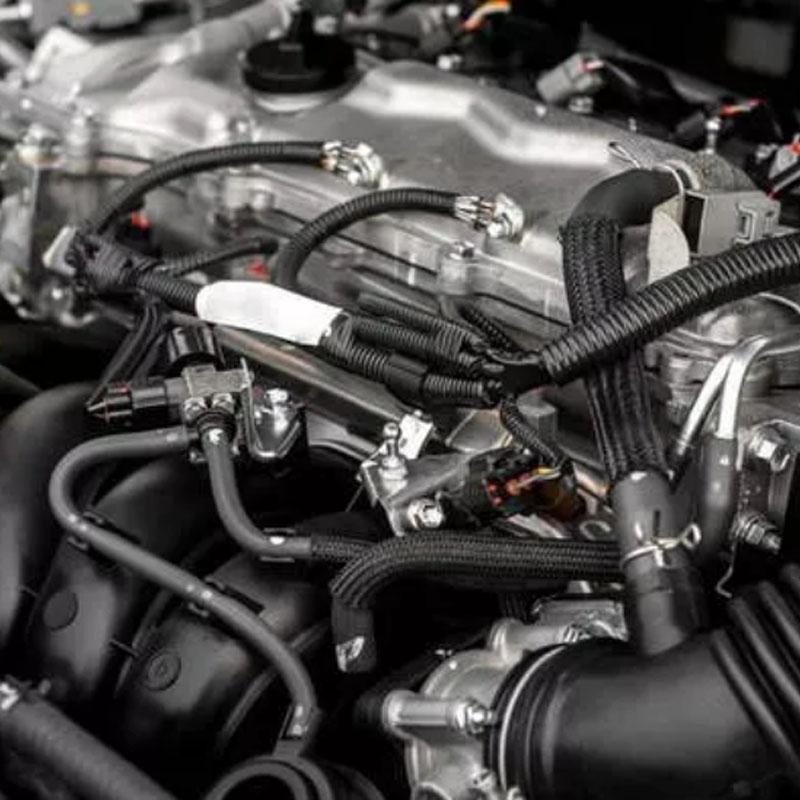
New Energy Vehicles (BEVs, PHEVs, FCEVs): M8 connectors for battery management system (BMS) sensor wiring, M12 connectors for motor controller and power battery signal connection, ensuring stable operation under high-voltage and high-current working conditions, with excellent insulation performance.
Special Vehicles (emergency vehicles, engineering vehicles): M12 connectors for on-board emergency equipment power supply and control signal transmission, LD20 connectors for hydraulic system and lifting system power transmission, with strong anti-impact and anti-interference performance to adapt to complex operating scenarios.
2. Connector Structure & Forming Suggestions
Locking Structure: Screw lock or snap-lock system is recommended to ensure stable connection, preventing loosening caused by vehicle driving vibration and road bumps, with vibration resistance up to 10Hz~2000Hz, acceleration 147m/s², meeting automotive vibration test standards.
Protection Level: IP67 or above for engine compartment and chassis connectors; IP65 for interior electronics, effectively preventing dust, engine oil, and rainwater intrusion, and ensuring stable operation in high-humidity environments.
Anti-misinsertion Design: Precise positioning and anti-misinsertion structure are required to avoid circuit faults caused by wrong connection during vehicle maintenance or component replacement, improving maintenance efficiency and reducing potential safety hazards.
Structural Type: Single-core or multi-core modular design is adopted; reinforced high-temperature resistant shell structure is recommended for engine compartment connectors, and flame-retardant sealing rings are added to the interface to prevent oil and dust from entering, with single-pole and multi-pole options to match different power (high/low voltage) and signal transmission needs.
3. Summary Recommendations
Recommended Specifications: Covering our full range of KMYD automotive connectors (M series: M8, M12, M16, M23 connectors; SP/SD/LD/FD series: SP13, SD15, LD20, FD25 connectors; RF connectors), matching signal (1-15A) and power (15-500A) types, with frequency range up to DC-18GHz for RF models, to meet different automotive and supporting equipment needs.
Recommended Structure: Modular design with anti-misinsertion and reliable locking, 360° EMI/RFI shielding (to avoid interfering with on-board electronic equipment), IP65+ protection level, and reinforced high-temperature resistant interface sealing, ensuring stable operation in high-temperature, vibrating and electromagnetic interference automotive environments.
Recommended Materials: High-temperature resistant PA66 or PBT thermoplastic shell, high-insulation PTFE insulator, high-conductivity copper alloy terminals, with gold or tin plating for terminals and anti-corrosion plating for shells, meeting high-temperature resistance (-40℃~+180℃), flame-retardant and anti-corrosion requirements, complying with ISO 6469 and GB/T 25102 standards.
Advantages: Excellent high-temperature resistance and anti-vibration performance, strong electromagnetic compatibility, good insulation and conductivity, wide temperature adaptability, long service life, and compliance with domestic and international automotive industry standards, suitable for global automotive market application.
With scenario-oriented structure design, strict material selection, and targeted high-temperature and anti-interference treatment, KMYD automotive connectors ensure stable power supply and signal transmission in harsh automotive operating environments, providing reliable support for the safe and efficient operation of traditional and new energy vehicles.
KMYD has years of experience in connector manufacturing, specializing in developing and producing automotive-adapted connectors. We provide feasible configuration suggestions for pin counts, termination, locking system, material selection, and surface treatment, and offer customized services based on actual automotive application scenarios and performance requirements, helping customers improve equipment reliability and reduce maintenance costs.




 Tel: +8619924482730
 Email: info@kmydconnector.com
 MP/WhatsApp: +8619924482730
 Manufacturer Address:Baoan District, Shenzhen City, Guangdong Province,China