

An Ethernet link indication on an M12 cable assembly to RJ45 does not establish everything a buyer may mean by “tested.” The devices may communicate during the check while the cable's specified transmission limits remain unevaluated. Even a cable-test report needs the correct test object, adapters and limits. After approving the connection map, decide whether acceptance concerns the individual assembly or an installed link, and whether the required evidence is functional operation, cable qualification or standards-based certification.
First, find out what “link tested” means
A supplier's photograph of an illuminated port and a saved cable-analyzer report can both arrive under the label “Ethernet test.” They are different evidence. Ask what instrument or equipment produced the result, what was connected, and what the test was intended to establish. Do this before comparing the result with the purchase requirement.
For an operating-network check, identify the devices, their configuration and the communication function actually exercised. If an application exchanged messages, record that observation. Do not expand it into a cable category claim or assume that every required operating condition was represented. A successful demonstration is useful when its scope stays visible.
This discussion starts after the equipment interfaces and contact assignments have been agreed. If those remain uncertain, resolve the assembly specification first. A more capable instrument cannot decide which interface the customer intended to order.
Choose the evidence for the acceptance question
Fluke Networks distinguishes cable verification, qualification and certification. Verification addresses wiring; qualification assesses support for a network technology or speed; certification compares measured cable performance with the selected standard's limits. That terminology helps separate requirements without prescribing one instrument for every purchase.
| Acceptance question | Relevant evidence | Do not infer |
|---|---|---|
| Was the approved wiring built? | Verification against the required connection pattern | That transmission requirements were measured |
| Did these devices communicate? | Defined network or application-function check | That the assembly met every cable-category limit |
| Can this cabling support the required network service? | Suitable cable-qualification result | That the full certification test set was performed |
| Does the tested cabling meet an agreed standard? | Certification report using the appropriate configuration and limits | That a different assembly, topology or environment is also covered |
A purchase may require more than one row. For example, an equipment builder may need both a cable-performance report and a machine communication check. Keep these deliverables separate so that completing one does not silently cancel the other. Agree the requirements before the sample reaches the test bench.
A channel result can leave the cord ends outside the measurement
This is a particularly important distinction when buying a finished M12-to-RJ45 lead. The item being accepted is an individual assembly, yet a report may have been made using a setting intended for an installed channel. Identical-looking pass screens do not guarantee identical coverage.
Fluke's M12-adapter documentation gives a concrete example. In its channel test, the mated near-end crosstalk contribution of the plug and jack at the test adapter is excluded. In its patch-cord test, that contribution is included. Near-end crosstalk, often abbreviated NEXT, concerns unwanted coupling between pairs near the measurement end. The distinction changes which connector effects the result covers.
That does not make channel testing incorrect. It makes the test configuration part of the acceptance decision. When ordering a factory-terminated cord, ask the test owner to identify the method intended for that object. When evaluating an installed connection, identify the complete link arrangement instead. Do not select a different test limit simply because it produces a pass.
Read the setup beside the pass status
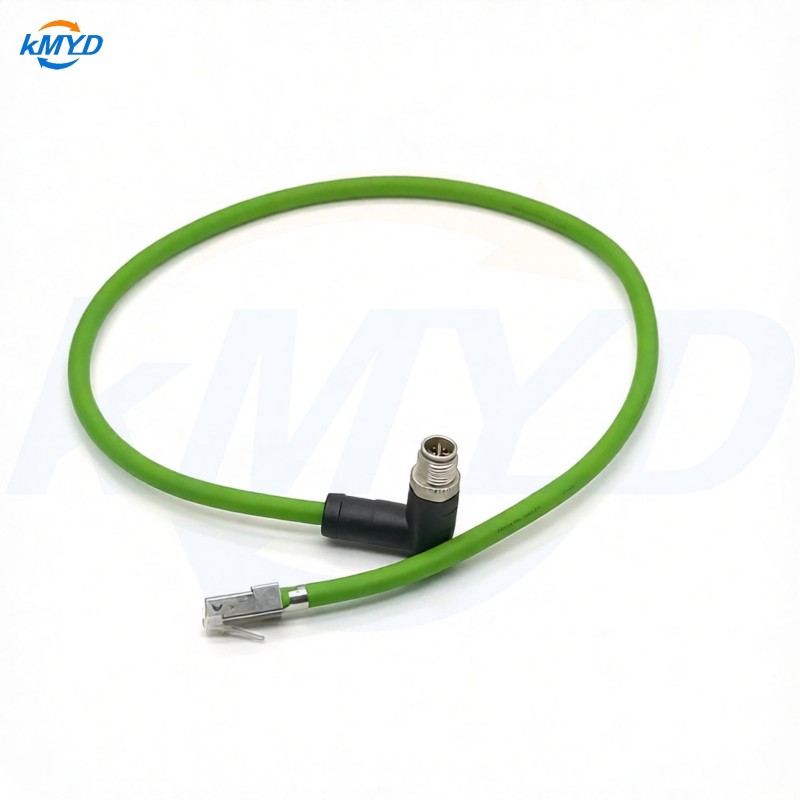
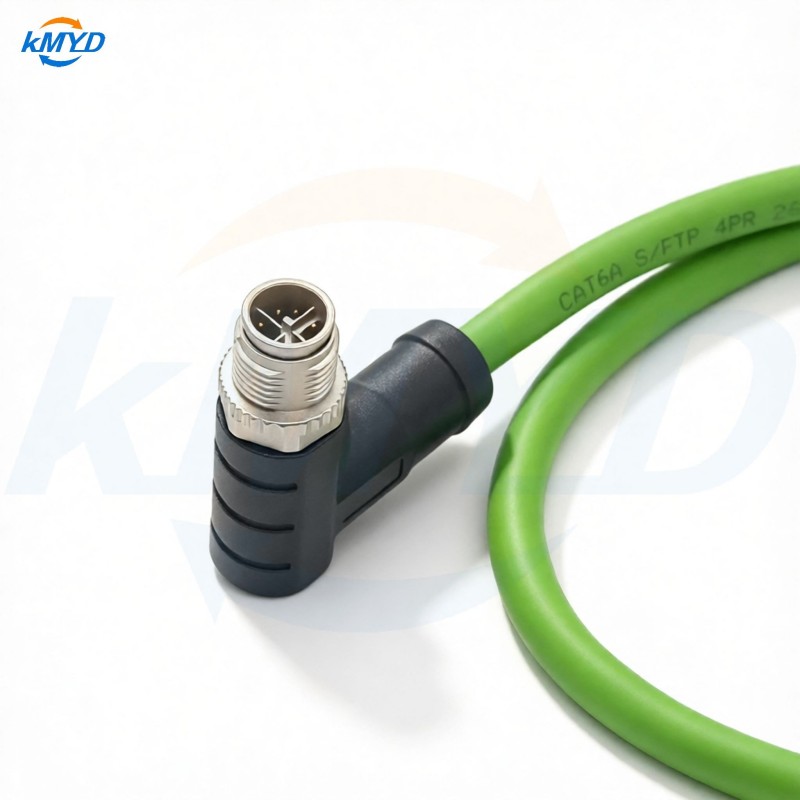
For KMYD's M12-to-RJ45 cable configuration, include the exact offered coding and assembly reference in the test request. Fluke documents different M12 adapters and specific hybrid-cord arrangements with an RJ45 test adapter. An adapter that physically connects is not, by that fact alone, the correct adapter for the selected measurement.
Ask for the saved result that identifies the test configuration, selected limit and relevant adapters. Keep the tested sample or assembly reference visible. Where an extra conversion lead is used, require the test owner to explain whether it is included in the measured path and whether the method supports that arrangement. An unexplained extra lead makes the boundary of the result uncertain.
Then compare the report with the order's actual acceptance statement. If the requirement concerns the finished cord but the report concerns a channel, have the test owner resolve the mismatch. If only a network demonstration was agreed, describe it accurately rather than rename it certification after delivery.
The final handover should let the buyer answer one specific question: which evidence covers this assembly's required Ethernet performance? Keep the functional observation, qualification or certification result under its own name. That makes a future change of cable or connector reviewable without rebuilding the meaning of “tested” from an old green indicator.
Technical references: Fluke Networks' test-scope overview, M12 adapter measurement boundaries, and documented hybrid-cord test configurations.



 Tel: +8619924482730
 Email: info@kmydconnector.com
 MP/WhatsApp: +8619924482730
 Manufacturer Address:Baoan District, Shenzhen City, Guangdong Province,China