

Labels on custom cable assemblies should distinguish the ordered design, its revision and the physical item being handled. These are different identities. A part number can name a build, a revision can identify its approved definition, and a lot or serial number can connect a supplied item to its records. Decide which identities users need, then place readable markings where they remain useful during receiving, installation and replacement.
One marking does not have to do three jobs
Consider two cables that look identical but connect different circuits. If both carry only the customer's logo, the marking helps identify a supplier relationship but gives an installer little help choosing between them. If both carry only a batch number, the record may be traceable while the intended design remains difficult to recognize.
Keep the roles separate when writing the marking requirement. The assembly part number identifies the ordered design. The revision identifies the controlled version of that design. A lot or serial identifier connects the delivered item to the manufacturing or inspection records retained for it. Use only the fields the project needs, but do not expect one undefined code to substitute for all of them.
Any code needs a maintained reference. A short readable identifier can be more useful than a long string nobody can interpret. If a machine-readable code is included, define the data it contains and where its record is kept. Retain human-readable information sufficient for the intended handling task when scanning is unavailable.
Write the label for the person who must read it
Receiving staff may need the assembly identity while the cable remains packaged. Installers need to identify the cable after unpacking. Service technicians may need to distinguish its two ends in a crowded enclosure. These are different reading conditions, so a label on the bag alone may not satisfy the work done later.
End designations can help when a cable is asymmetric. Define what those names mean in the installation documents and keep them separate from contact numbering. For example, an endpoint name should identify the destination or connection role; it should not imply that the connector has a universal signal assignment.
Choose the marking position on an actual assembly sample. Check whether the final installation hides it behind a bracket, places it against another cable or forces the reader to disturb the connection. Show the intended position on the drawing, with enough reference information to avoid random placement along the cable.
Do not put identification where it interferes with a seal, coupling action or required movement. A label's useful location is constrained by the connection and the route. Resolve those constraints during sample review, when the marking can still be adjusted without relabeling an entire delivery.
Material choice and information choice are separate
A clear part-number scheme does not make an unsuitable label durable. Specify the conditions the marking must face: handling, cleaning, exposure, temperature and movement as applicable. Then ask for a marking method appropriate to the cable surface and those conditions. Avoid assuming that a label suitable for packaging is also suitable for the installed cable.
Brady's wire-marker guidance describes several marking approaches, including sleeves, adhesive markers and tags. These illustrate why attachment and reading conditions influence selection. They do not establish which material KMYD will supply, or how an unspecified marking will perform in your installation.
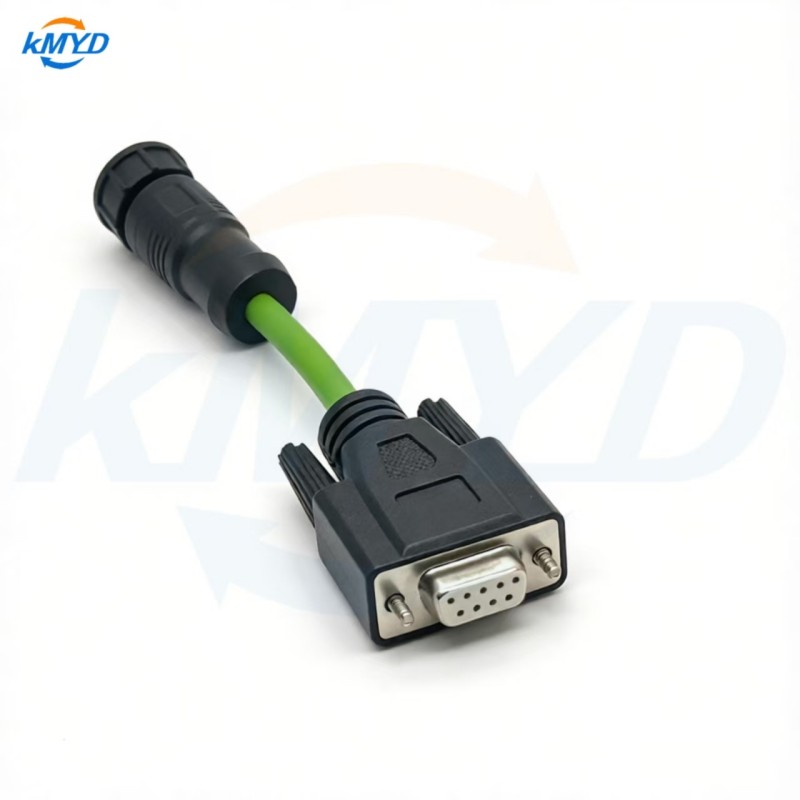
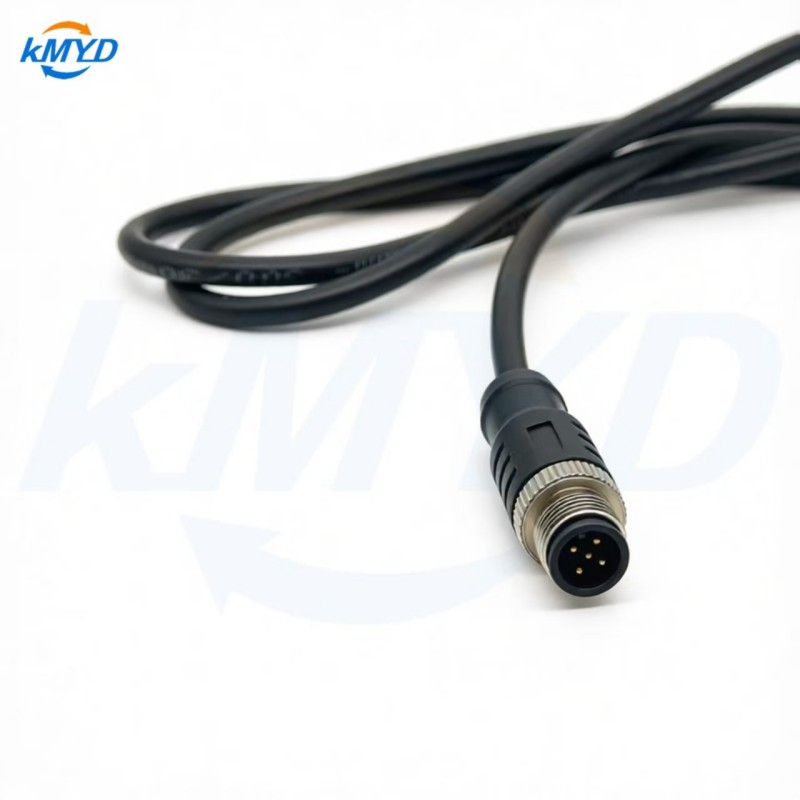
KMYD's M16-to-DB9 custom assembly and M12 custom cable offering both describe labeling as a customization topic. Send the proposed label content and placement with the requirement, then request confirmation of the method and any applicable qualification evidence.
Decide what happens when the drawing changes
A revised contact assignment can produce a cable that looks unchanged from the outside. If the old and new builds may coexist, the identification scheme needs to let the responsible teams distinguish them. Decide whether the change calls for a new part number, a revision change or another controlled distinction under the project's configuration rules.
Do not change the physical label independently from the assembly definition. Record which approved artwork goes with which build. A supplier needs to know whether remaining labels are still valid, which production items use the revised marking and how mixed stock is to be separated. Those are specific change decisions, not details to leave to the packing bench.
Also distinguish a label correction from a product change. Fixing a spelling error in an endpoint description does not automatically change the electrical assembly, while correcting a wrong part number may require checking whether the item itself was misidentified. Record the reason for relabeling and how the underlying identity was verified.
Review the finished marking in its real context
- Compare the printed information with the approved assembly and artwork references.
- Read both end markings with the sample placed in its intended route.
- Check that the physical item can be matched to its package and agreed traceability record.
- Resolve the treatment of old and new identifiers before approving a revised delivery.
Keep one accepted marking example with the drawing record. For repeat orders, that example should identify the required information and position without becoming a substitute for the current revision. A useful cable label answers a practical question immediately: which assembly is this, and which record tells me what belongs inside it?
Marking-method background: Brady guide to selecting wire markers. Confirm the supplied method for the actual cable and environment.



 Tel: +8619924482730
 Email: info@kmydconnector.com
 MP/WhatsApp: +8619924482730
 Manufacturer Address:Baoan District, Shenzhen City, Guangdong Province,China