

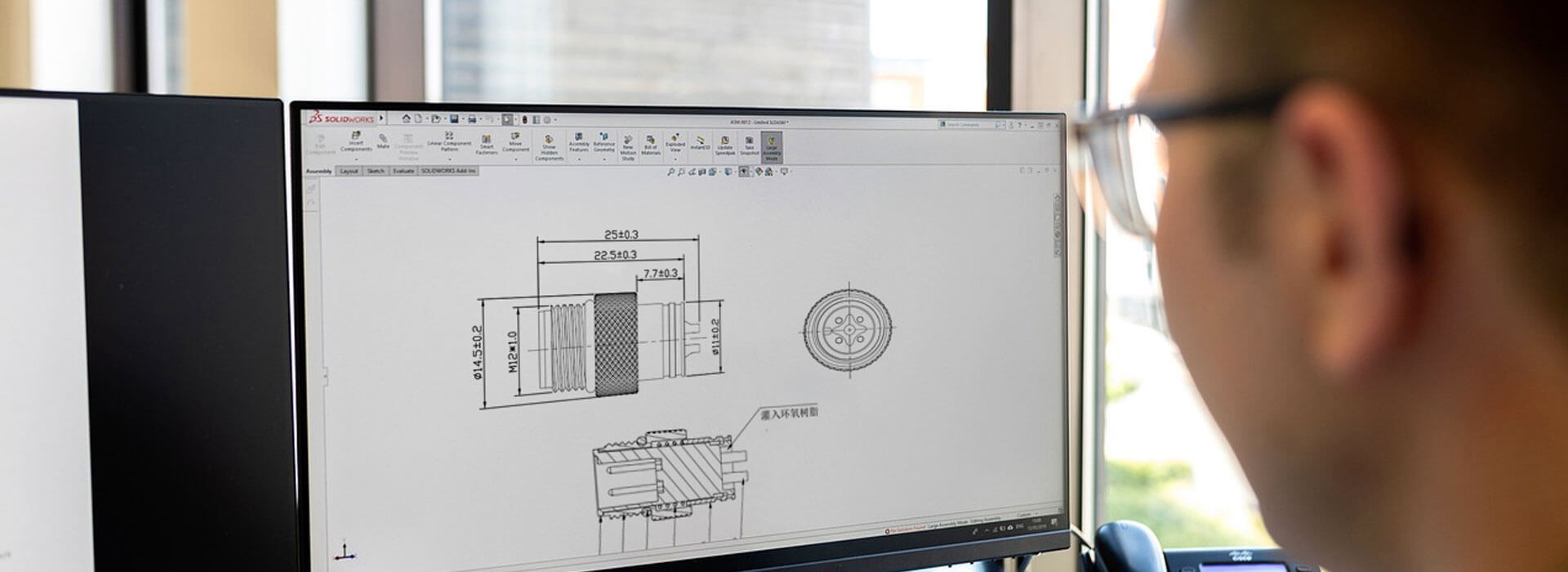
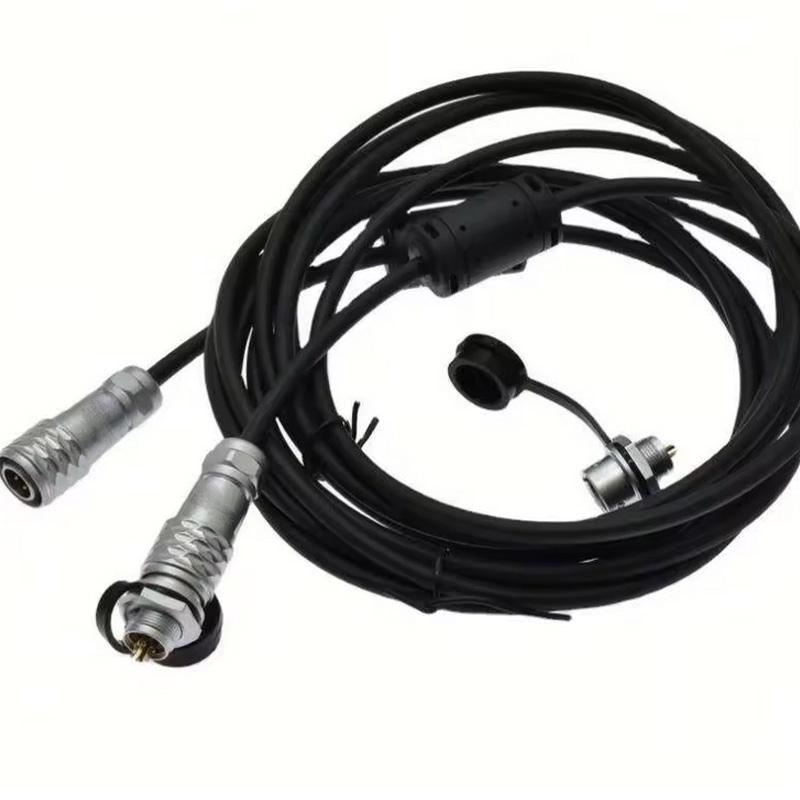
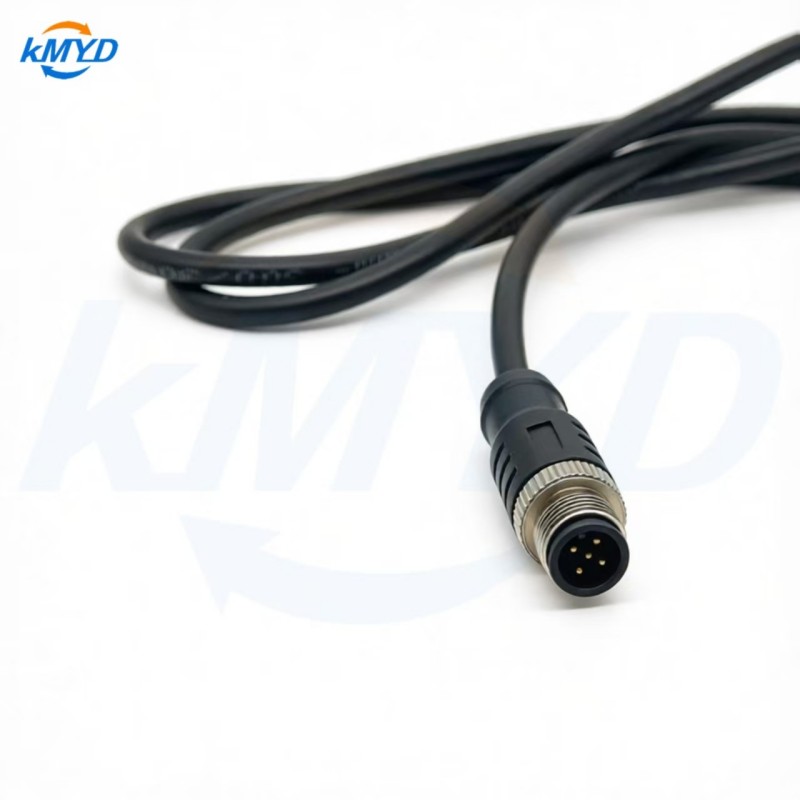
For an M12 cable assembly, PUR or PVC is a starting point for choosing the jacket, not a complete application specification. A protected indoor route may allow a different cable from a route exposed to abrasion, coolant or cold movement. Compare the proposed cable's documented limits with the actual route, then check the finished connector-to-cable construction. Neither a soft jacket nor the letters PUR establish repeated-flex life, chemical compatibility or the suitability of the complete assembly.
Describe the route before choosing the polymer
Consider two sensor leads on the same machine. One stays inside a protected cabinet and moves only when an enclosure is serviced. The other travels with a carriage and passes a coolant splash area. Specifying one jacket merely because both leads have M12 ends hides the conditions that matter. They might use the same cable after review, but the interface name alone cannot justify that decision.
Mark the exposed portions of the route on a drawing. Identify where the cable moves, touches surrounding parts, leaves a protected enclosure or encounters process fluids. Record the conditions at those locations, including installation and cleaning. “Factory environment” is too broad to tell a cable supplier whether occasional handling or repeated rubbing is the controlling requirement.
For a fixed route, review installation bends and service access without automatically imposing a continuous-motion requirement. For a moving route, ask for the specific cable construction and its documented motion conditions. Jacket selection and motion qualification are related decisions, but one cannot replace the other.

Compare two cable candidates, not two slogans
PVC means polyvinyl chloride; PUR means polyurethane. Cable manufacturers offer formulations and constructions within both material families. For example, igus publishes PVC cables designed for repeated motion, while its jacket guidance describes different oil-resistance properties within PVC offerings. That is enough to reject the shortcut “PVC is always static, PUR is always dynamic.” Those examples concern igus products and do not establish a rating for a KMYD cable.
There is still a useful shortlist distinction. Igus positions its PVC options as economical candidates for moderate, dry indoor conditions, and highlights notch and oil resistance in PUR offerings for machine-tool environments. A buyer could therefore start by comparing a documented PVC candidate on a protected indoor route and a documented PUR candidate where wear or oil exposure matters. This is a selection direction, not proof that either proposed KMYD assembly meets the requirement.
Ask the supplier to name the candidate cable behind each quotation. A material-only comparison cannot reveal whether one candidate has a different conductor construction, outside diameter or shield. Those differences may affect the assembly even when the proposed outer jacket meets the environmental requirement.
| Route condition | Evidence to compare | What remains unresolved by the material name |
|---|---|---|
| Protected, mainly stationary cable | Candidate cable data for installation, temperature and occasional handling | Whether every quoted cable has the same permitted bends and service conditions |
| Sliding or rubbing contact | Abrasion or wear information relevant to the actual contact surfaces | Whether changing the jacket alone addresses the source of contact |
| Oil, coolant or cleaner exposure | Compatibility information identifying the fluid and exposure conditions | Whether a general oil-resistance statement covers the fluid used on this machine |
| Repeated movement or cold starts | Motion and temperature limits for the proposed cable construction | Whether room-temperature handling reflects the operating route |
The table is a way to compare documentation, not a ranking of polymers. A documented PVC candidate may meet a particular route; an unspecified PUR candidate may still leave key requirements unanswered. Where both are suitable, compare the quoted assembly cost, installation implications and replacement availability on the same basis.
A jacket change can change the assembly
Check what the quotation actually substitutes. If the outside diameter changes, the connector's cable entry, seal or molding arrangement may need another review. If conductor or insulation dimensions also change, the termination must remain suitable. A drawing that says only “PVC or PUR equivalent” gives purchasing too much freedom to make a technically meaningful change without identifying it.
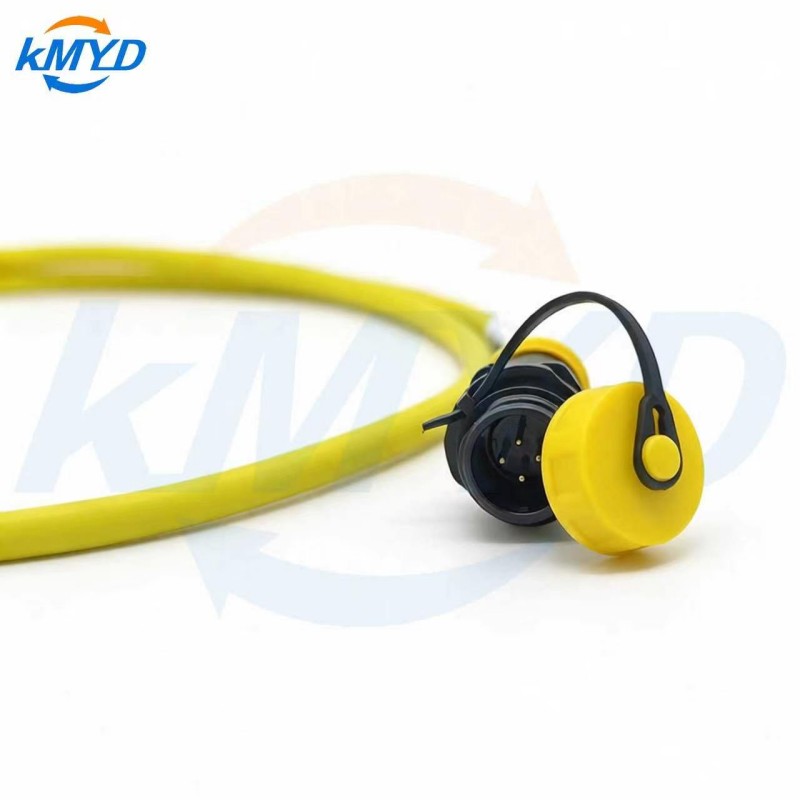
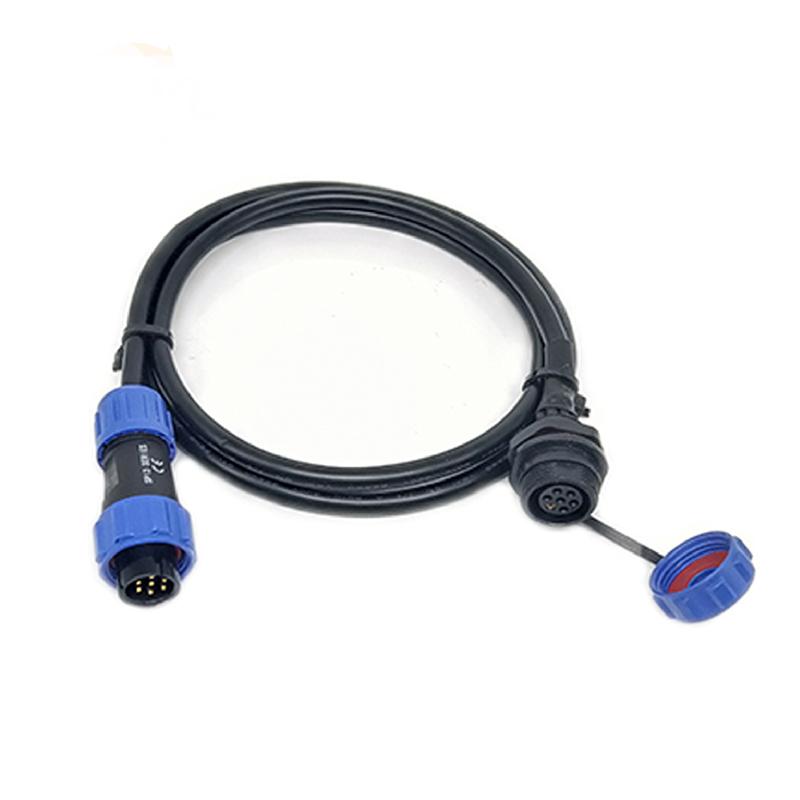
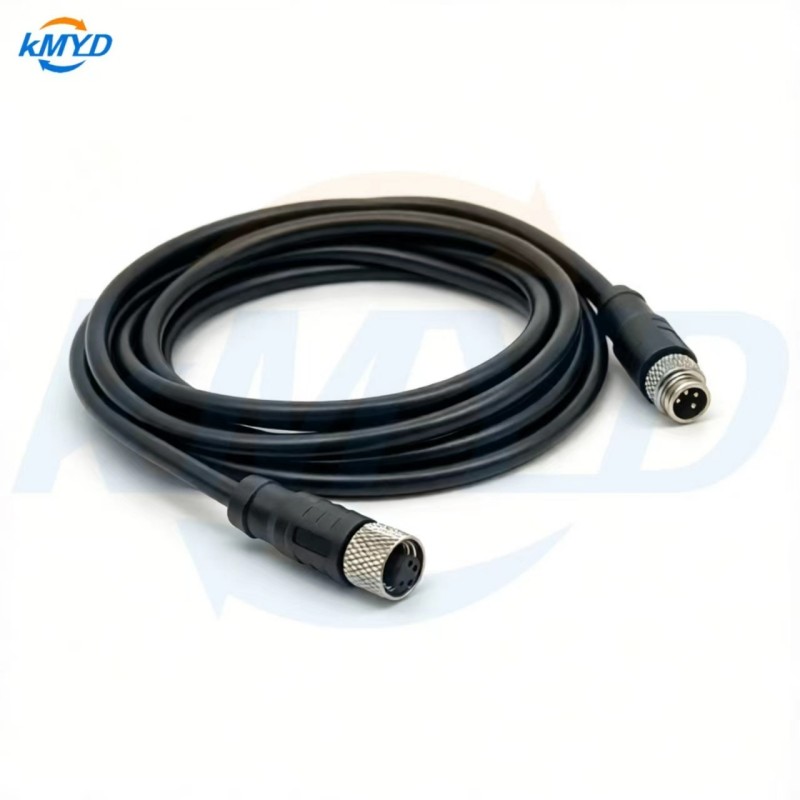
KMYD's M12 molded-cable listing with PVC/PUR options provides a relevant inquiry route. It does not mean that any PVC and PUR cable can be exchanged inside the same finished part. Request the offered cable reference, jacket identification and assembly drawing for the particular quotation.

Approve the identified cable for the identified exposure
Use a short comparison record with one row per candidate. Attach the cable data, note which route conditions it covers, and leave unsupported conditions visibly open. If documentation cannot answer an exposure question, agree an appropriate sample evaluation with the responsible supplier and equipment engineer. Define the exposure, observations and acceptance conditions before the evaluation begins.
Keep the chosen cable reference on the released assembly specification. For future alternatives, require confirmation of the same route conditions and review any dimensional or construction changes before acceptance. This makes the purchasing decision repeatable: the next order calls for a known cable in a known assembly, rather than another black cable described by the same three letters.
Material context: igus guidance on cable jacket formulations and its PVC cable range for motion applications. Product-specific claims remain limited to the cited manufacturer's cables.


 Tel: +8619924482730
 Email: info@kmydconnector.com
 MP/WhatsApp: +8619924482730
 Manufacturer Address:Baoan District, Shenzhen City, Guangdong Province,China