

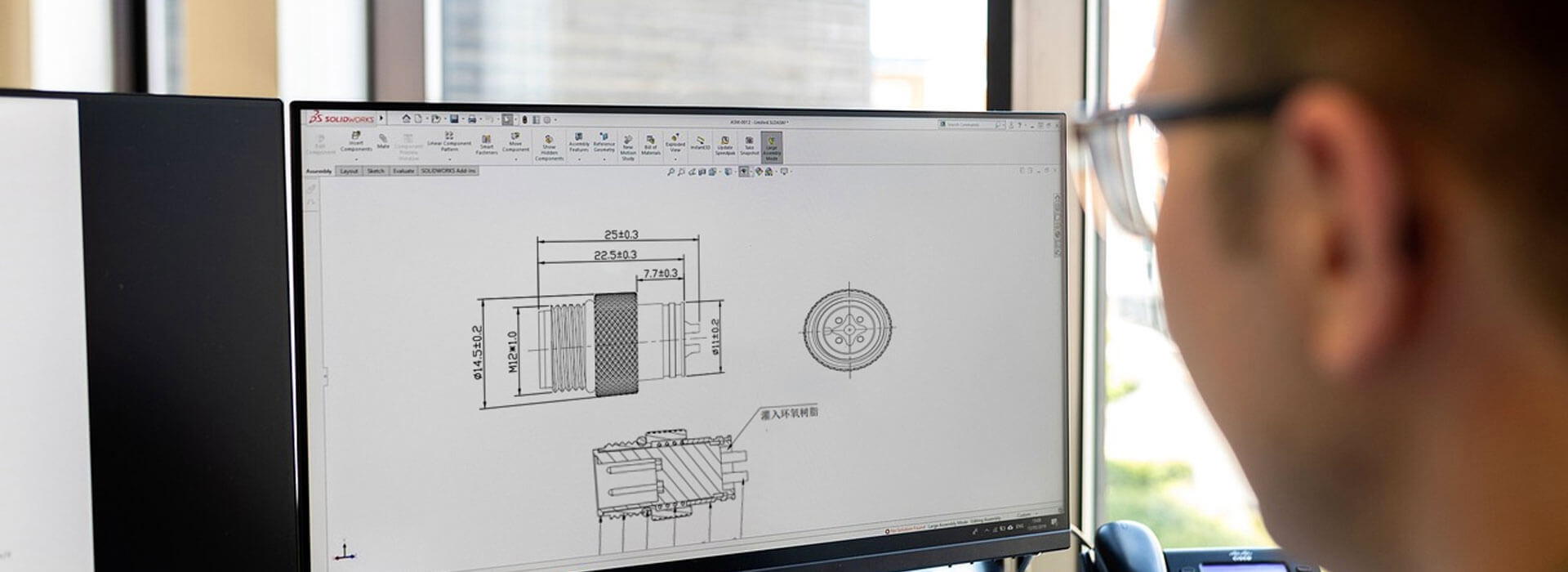
Water found near an RJ45 connection does not identify the route by which it arrived. Begin by separating observations at the cable entry, mating interface, panel joint and enclosure interior. Record the condition before cleaning or dismantling it, then investigate one boundary at a time using the equipment and connector supplier's procedures. Replacing the visible connector may leave the original path unchanged if moisture entered elsewhere or the replacement repeats the same installation mismatch.
Preserve the first useful observations
Take the equipment out of service under its isolation procedure before inspecting a wet connection. Include power delivered through the data cable in that procedure where applicable. Do not reconnect a wet assembly merely to see whether the network link returns. Decide with the responsible technician which parts must be retained for assessment.
Record when the symptom appeared: during rain, after cleaning, after a temperature change or immediately after a cable replacement. Note whether the connector was fully connected, temporarily uncovered or fitted with a cap. These details do not prove a cause, but they narrow the conditions that the investigation must explain.
Photograph the surrounding panel, the cable route and each accessible side of the connection before disturbing them. Mark where moisture was first observed and where surfaces were dry. A close-up of wet contacts is useful, but it omits the enclosure seams and cable approach that may be relevant to the route.
Trace four boundaries, without assuming which failed
| Location to investigate | Evidence to record | Question for the responsible supplier |
|---|---|---|
| Cable entry | Cable identification, jacket condition and the installed entry parts | Does this exact cable fit the documented seal arrangement? |
| Mating interface | Both connector references, closure state and visible contamination | Is this pair approved as an environmentally protected connection? |
| Panel joint | Seal placement, surface condition and the mounting stack | Does the assembled panel interface follow the installation drawing? |
| Inside the enclosure | Moisture on the rear port, nearby cables or other enclosure surfaces | Could the observed wetting have reached the connector from the protected side? |
The first three boundaries can be physically close together. Water visible at the front of a port is therefore not enough to attribute the problem to its mating seal. Equally, a dry-looking outer shell does not establish that the rear jack or cable entry remained dry. Keep observations separate from the proposed cause in the service record.
Changes made during a previous repair deserve attention. A cable with the same network category may have a different outside diameter; a substitute mating shell may not belong to the original sealed pair. Treat those as hypotheses to check against part records, rather than assuming that an electrical connection also reproduces the environmental assembly.
Compare the installed parts with the approved build
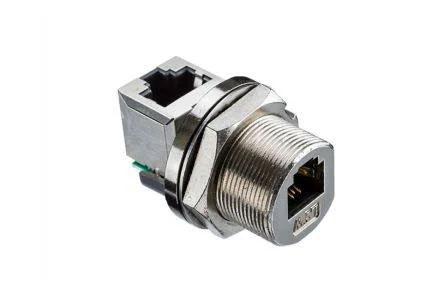
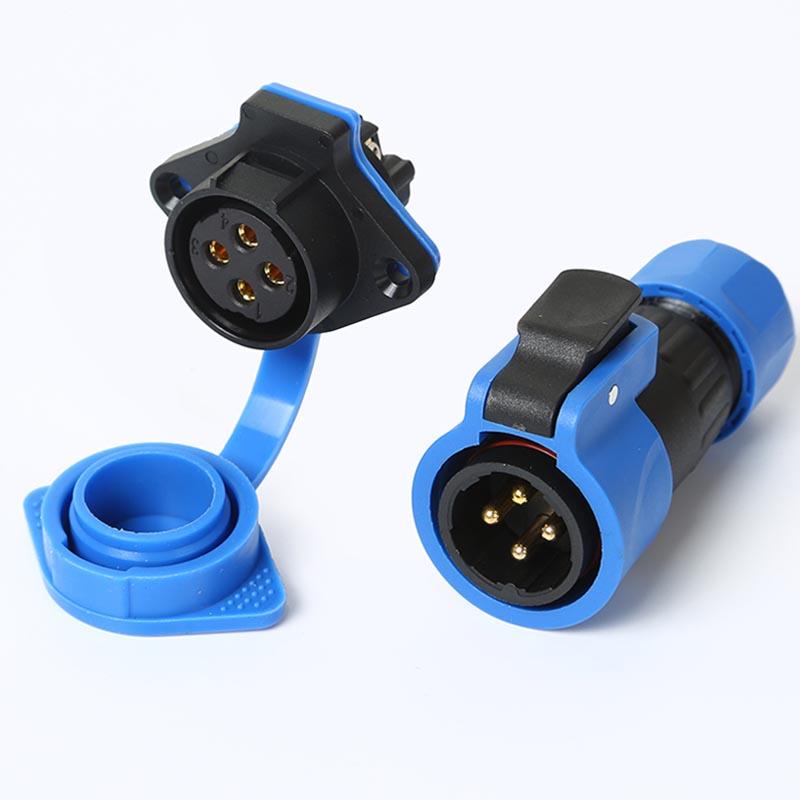
The KMYD circular female RJ45 connector listing identifies a threaded, front-fastened construction. Its presence in an assembly does not identify the connected cable-side enclosure, the selected gasket or the conditions of an environmental test. Obtain those details for the installation being investigated.
Ask for the actual mating part and mounting instructions. Compare them with the retained components and photographs. Check whether the panel preparation and cable-entry components correspond to the documented arrangement. Do not supply a generic tightening value or add sealant around a suspected route unless the manufacturer has approved that repair method.
Separate an environmental complaint from a transmission complaint. A link indicator or a successful short data exchange does not determine whether an enclosure is sealed. Likewise, a dry connector does not establish that every network-performance requirement has been met. Record the ingress findings and the electrical or network checks independently so a successful result in one area does not conceal an unresolved issue in the other.
Agree the investigation before applying water again
If the initial inspection does not reveal the route, ask the supplier or a competent test facility to define a controlled examination. State which interfaces will be evaluated, how the sample is configured and which observations would distinguish the competing explanations. Randomly spraying a live assembly can change the evidence and creates a different exposure from the original event.
Consider condensation as a separate possibility when the timing and observations suggest it. Moisture arising inside the enclosure requires a different investigation from liquid entering through the connector face. Do not decide between them solely from the presence of droplets; preserve the environmental history and examine other affected surfaces.
The standards context also matters when selecting a follow-up test. IEC 60068-2-18 distinguishes several water-exposure methods. The appropriate method must follow the agreed requirement; an improvised spray does not reproduce an immersion test, and neither supplies evidence of corrosion resistance.
Close the repair with evidence of the route. Retain the original symptom record, the confirmed or unresolved cause, the changed parts and the checks completed before return to service. If the route remains uncertain, say so explicitly. That prevents the next technician from treating a replaced RJ45 connector as proof that the enclosure problem was solved.
Technical reference: IEC 60068-2-18.

 Tel: +8619924482730
 Email: info@kmydconnector.com
 MP/WhatsApp: +8619924482730
 Manufacturer Address:Baoan District, Shenzhen City, Guangdong Province,China