LD20/SP20 Heavy-Duty Square Connector Dimensions and Specs
Marine Lighting Connectors for Harsh Shipboard Environments
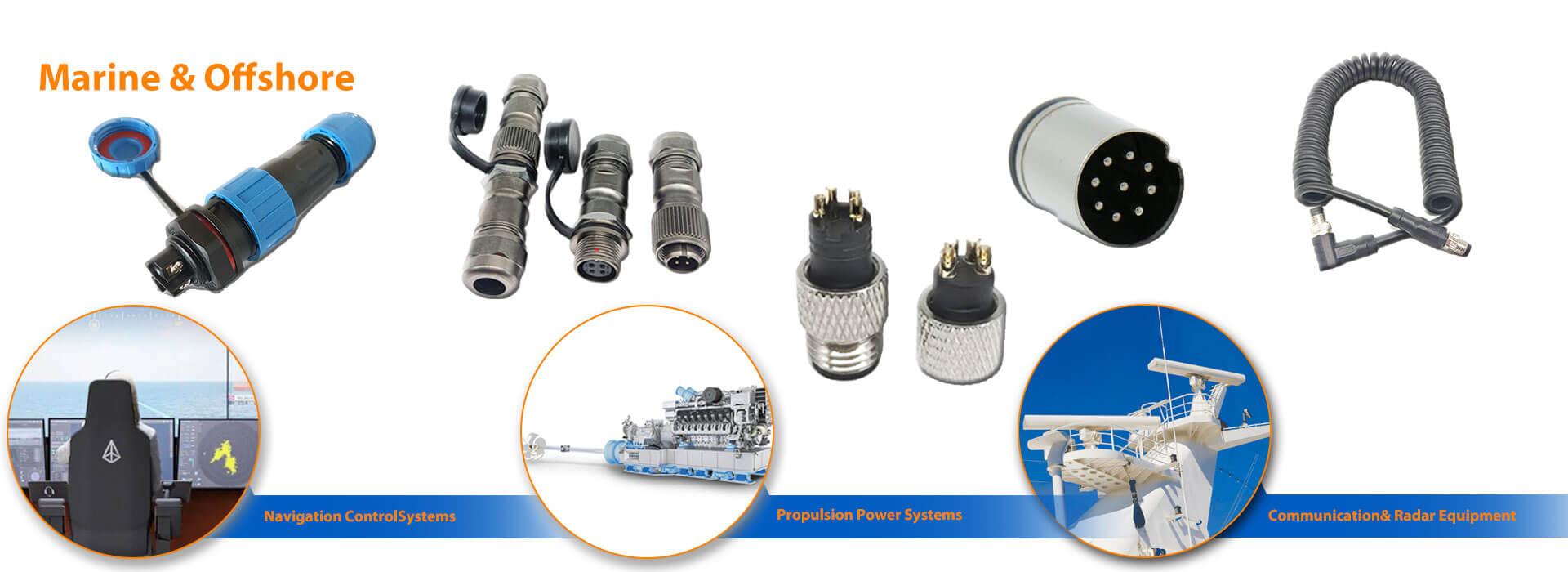
Connectors are essential components in marine lighting systems, ensuring reliable power and signal transmission across various lighting fixtures on ships, offshore platforms, and submersible vessels. Designed to withstand harsh marine environments—including saltwater corrosion, vibration, and extreme temperatures—these connectors integrate seamlessly into lighting networks for navigation, deck illumination, cabin lighting, and emergency systems.
Key Requirements for Marine Lighting Connectors
When selecting connectors for marine lighting fixtures, engineers must evaluate several critical factors to ensure long-term performance and safety:
-
Environmental Resistance: Connectors must resist saltwater corrosion, UV exposure, and temperature fluctuations typical of open-sea and offshore operations.
-
Ingress Protection (IP Rating): A high IP rating (e.g., IP67 or IP68) is necessary to prevent water and dust ingress, especially for deck and underwater lighting applications.
-
Mechanical Durability: Vibration and mechanical shock from vessel operation require robust locking mechanisms and strain relief to maintain secure connections.
-
Electrical Performance: Stable current and voltage ratings, low contact resistance, and reliable signal integrity are essential for navigation and safety lighting systems.
Application Fit and Installation Considerations
Marine lighting connectors are used across a range of fixtures, including navigation lights, searchlights, cabin and corridor lighting, and emergency exit systems. The choice of connector series, pin count, and cable entry depends on the specific lighting load, mounting style (panel, cable, or bulkhead), and the need for field-wireable or pre-molded assemblies. For installations in engine rooms or control panels, connectors with higher temperature ratings and flame-retardant materials are recommended.
For harsh offshore environments, such as those found on drilling platforms or fishing vessels, connectors must also accommodate frequent mating and unmating cycles, cable strain, and exposure to chemicals or fuel. In such cases, a heavy-duty square connector series may be more suitable than standard circular types, depending on the space and wiring requirements. For additional context on deep-sea and offshore applications, see our guide on deep-sea connectors for ROV and AUV pressure resistance.
Verification and Quality Evidence
To ensure reliability, connectors for marine lighting should be validated through salt spray testing, temperature cycling, and mechanical endurance tests. While specific test data for this product category is not listed here, buyers are advised to request detailed specifications, including IP ratings, material certifications, and mating cycle counts, from the supplier before procurement.
For related guidance on selecting connectors for demanding marine environments, see our article on offshore drilling platform connectors for harsh marine environments. Additionally, for applications requiring high-density power and signal connections in confined spaces, the LD20/SP20 heavy-duty square connector dimensions and specs provide useful reference data.
Next Steps for Procurement
To proceed with a connector selection for your marine lighting project, please provide your specific requirements—such as voltage, current, IP rating, cable diameter, and mounting style—via the inquiry form or WhatsApp. Our team can assist in matching the appropriate connector series and configuration to your application.




 Tel: +8619924482730
 Email: info@kmydconnector.com
 MP/WhatsApp: +8619924482730
 Manufacturer Address:Baoan District, Shenzhen City, Guangdong Province,China