

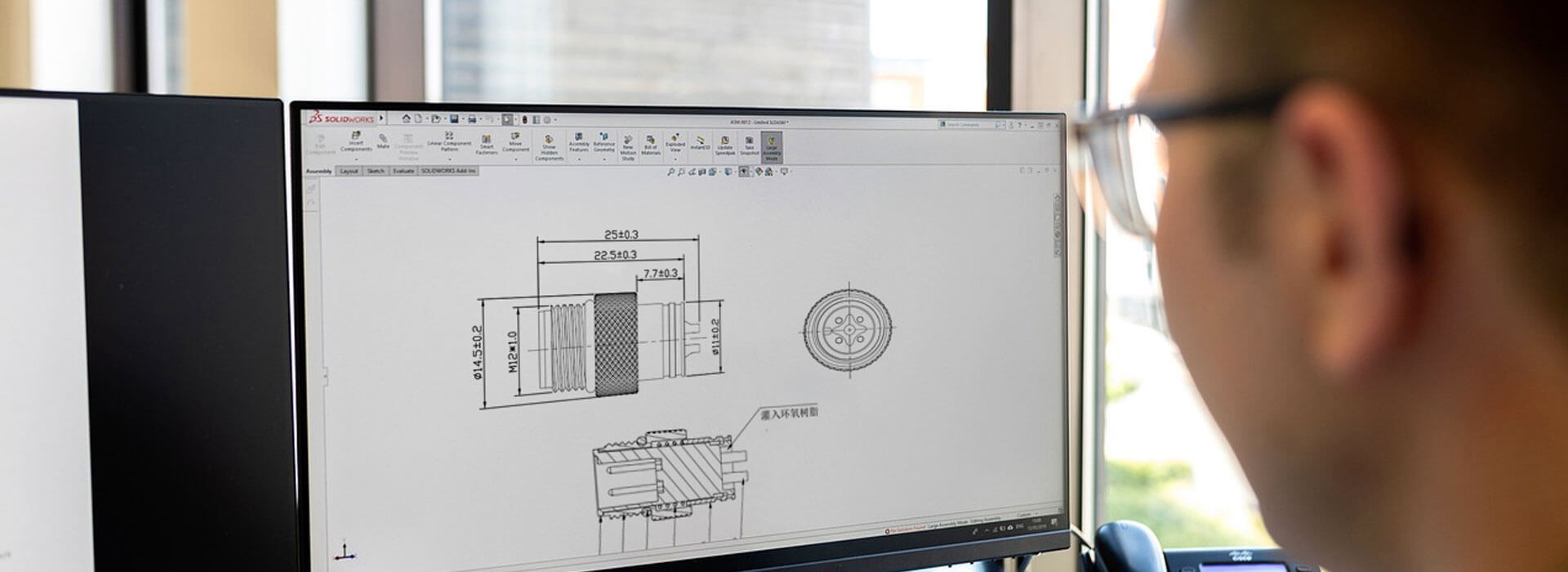
Qualify the parts of waterproof connectors that will actually see sunlight, then define what those parts must still do after exposure. That may include a housing, cable jacket, molded transition, cap and tether. A water-ingress claim does not establish their resistance to weathering. Useful evidence connects an identified material or finished part to an appropriate exposure method and a retained property, rather than offering an unexplained number of hours under a UV lamp.
Draw the sunlight boundary around the installed connection
A connector mounted beneath a cover may be shaded while its cable crosses an exposed frame. On another machine, the cable enters a cabinet immediately but the unused-port cap remains outside. Those arrangements put different parts in sunlight. Mark the exposed portions on an installation photograph or drawing before asking the supplier for outdoor evidence.
Include the ordinary service positions. A cap that hangs beside the connection while equipment runs can receive a different exposure from a cap screwed onto a sheltered port. A removable machine cover may also change the light reaching the assembly. Record the location, orientation and any intended shading so the proposed evaluation represents the application.
List the materials behind those exposed surfaces. Ask for the supplied housing grade, cable compound and accessory references, including the relevant color or finish. A generic polymer family or a familiar black jacket is insufficient identification for deciding whether a particular weathering result applies.

Decide what must remain usable
“No visible change” and “still fit for service” are different acceptance questions. The first concerns appearance. The second concerns the function that each part supplies. Define both where necessary, without using one as a shortcut for the other.
- Appearance requirement
- A specified color, surface condition or legible marking remains acceptable by an agreed comparison method.
- Functional requirement
- The exposed part still provides its required mechanical, electrical or protective function under the agreed assessment.
For a housing, the relevant concern might be whether it remains intact during normal handling and mating. For a tether, it may be whether the cap can still be retained through its intended movement. For a jacket or molded transition, agree how flexibility, surface condition and the required connection functions will be assessed. These are questions to select with the supplier, not a universal set of tests for every connector.
Q-Lab identifies weathering changes that range from discoloration to cracking and loss of mechanical properties. That range explains why an attractive surface alone cannot close the review. Conversely, a cosmetic change should be judged against the actual appearance requirement instead of automatically being treated as proof of electrical failure.
Choose an exposure that answers the outdoor question
Ask the test specialist to identify the light source, exposure cycle and relevant temperature and moisture conditions. A test described only as “UV” leaves its purpose unclear. Different sources and filters can represent different light environments; the selection should follow the application rather than whichever test duration is already printed on a certificate.
The public scope of ISO 4892-2 describes xenon-arc exposure of specimens with moisture to represent weathering associated with daylight or daylight through window glass. It is an example of a defined material-exposure method, not a ready-made acceptance specification for a complete connector. The chosen edition, method and assessment still need to be agreed for the project.
Fluorescent-UV equipment also offers different lamp types. Q-Lab distinguishes lamps intended to represent parts of the sunlight spectrum from lamps used for other exposure questions, including germicidal UVC. A result from one light environment should not be renamed as qualification for another without a technical basis.
Ask whether the evidence comes from a material specimen, a molded component or a finished assembly. A flat specimen can help compare materials, but it does not exercise every feature of the installed connector. Decide which finished-part or assembly checks are needed after the selected conditioning to support the retained functions identified earlier.
Keep test hours and outdoor life on different lines
A claim such as “tested for many hours” may describe exposure duration while saying little about the result. Ask what changed, which property was measured and which acceptance condition was met. Retain an unexposed reference where the agreed assessment needs a before-and-after comparison.
Do not convert a laboratory duration into years outside by applying a general multiplier. Q-Lab explains that there is no universal hours-to-years conversion: outdoor conditions, the material and the laboratory cycle all affect the relationship. Any service-life interpretation needs a defensible correlation for the relevant application. A longer chamber exposure is not, by itself, a longer warranty.

Keep the qualified construction attached to the order
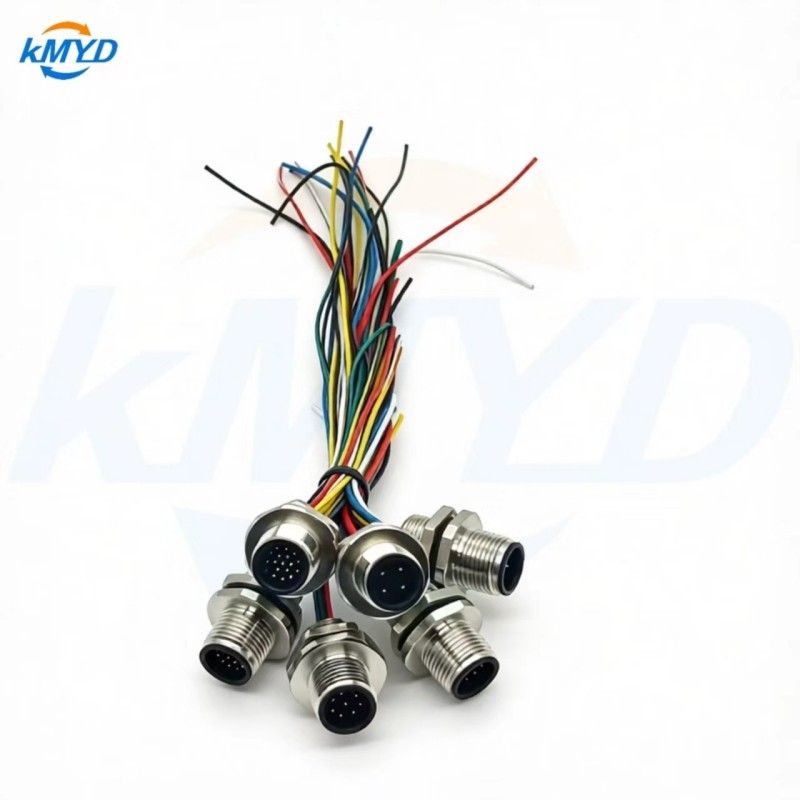
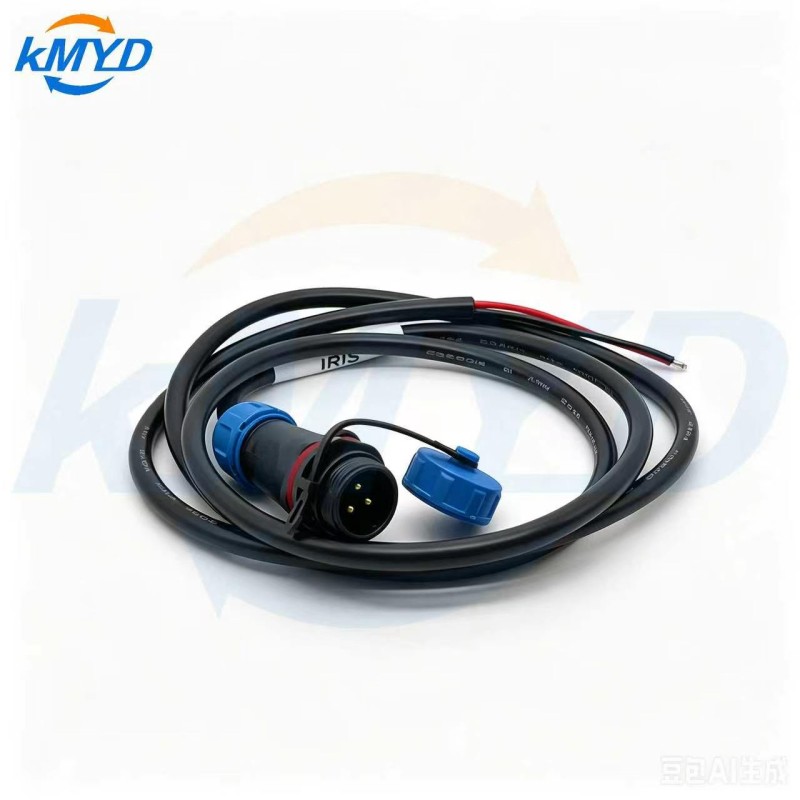
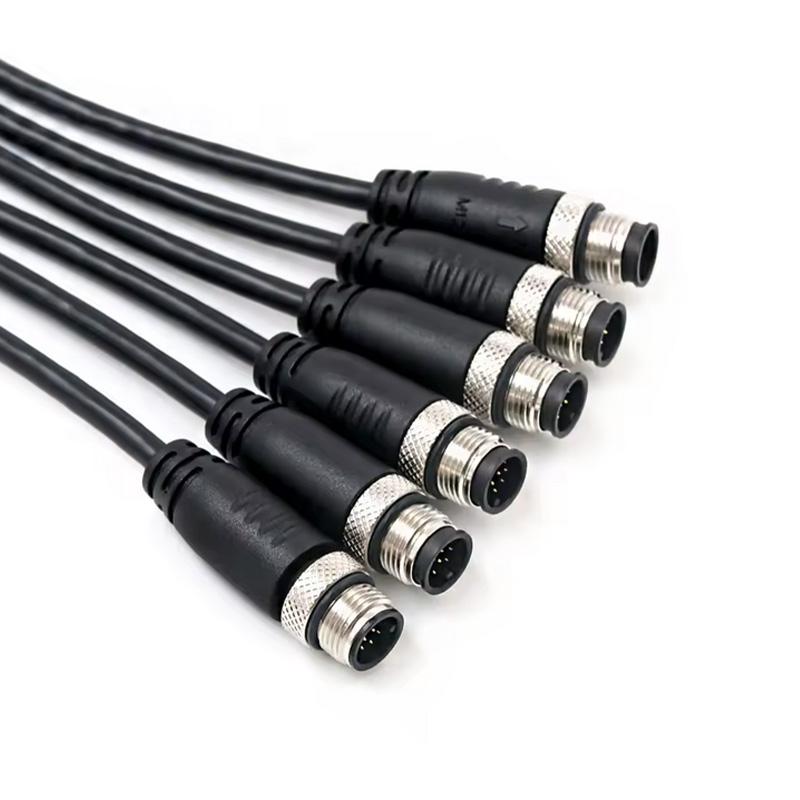
KMYD's molded M12 cable offering and SP-series pre-wired assemblies provide concrete products for discussing the exposure map. Their public product photographs do not provide weathering qualification or an outdoor service-life commitment. Obtain the proposed material and cable identities before connecting any supporting evidence to an order.
Preserve those identities when reviewing an alternative jacket, housing color, molding material or replacement cap. If a proposed substitution falls outside the accepted evidence, have the supplier explain the difference and agree how it will be resolved. This keeps “suitable for sunlight” tied to a defined build and useful retained functions throughout repeat purchasing.
Exposure-method background: ISO 4892-2 public scope; Q-Lab weathering and lamp descriptions; Q-Lab on interpreting accelerated exposure time.




 Tel: +8619924482730
 Email: info@kmydconnector.com
 MP/WhatsApp: +8619924482730
 Manufacturer Address:Baoan District, Shenzhen City, Guangdong Province,China