

Pack custom cable assemblies around the way the installer will remove and use them. The package should protect mating surfaces, support connector bodies, keep leads from tangling and let one required assembly come out without pulling on another. Agree the allowed coiling method with the cable supplier, then try the complete unpacking sequence on a sample. A tidy bundle is not enough if opening it puts the finished cable at risk.
Design for the first cable taken out
Consider a carton containing several finished leads. The cable jackets sit together, while the heavier connector bodies collect at the bottom. A technician lifts the first visible connector, but its cable passes underneath the others. What looked orderly when packed now requires pulling and untangling.
Start the packing discussion with the unit the installer needs: one replacement cable, one machine kit or several identical leads for a production station. Individual separation may suit the replacement part. A kit may benefit from compartments arranged in installation order. Bulk grouping may be practical for identical short leads, provided each can be removed without dragging its ends through the bundle.
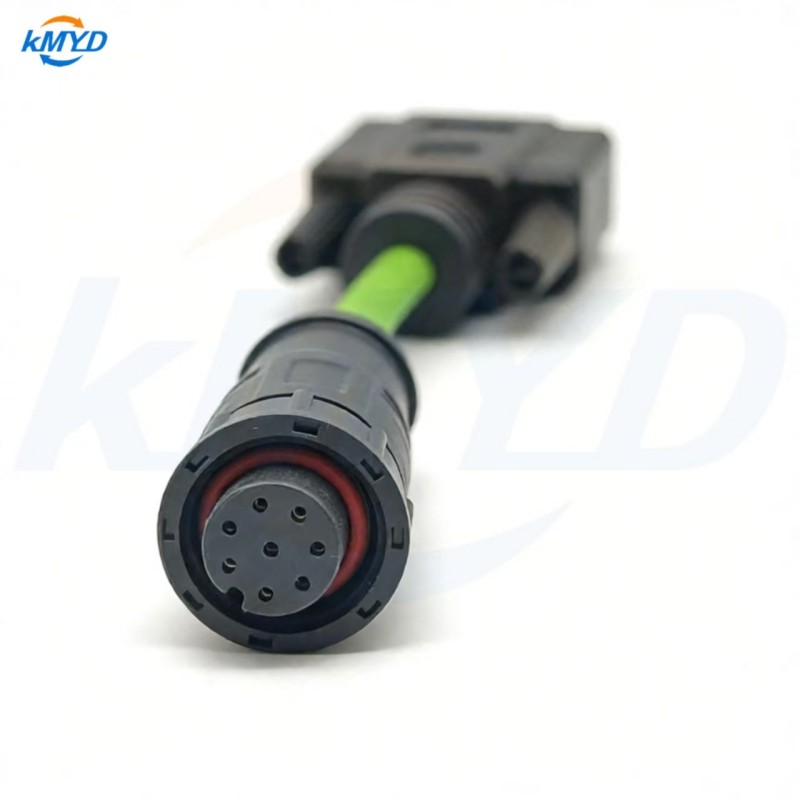
KMYD's M16-to-DB9 cable assembly illustrates why both ends matter. A round connector and a rectangular connector do not occupy the same space. Ask for a packing arrangement that accommodates their actual outlines; the product listing does not establish a particular shipping package.
Protect the ends without adding a removal problem
Identify the exposed features before choosing bags, trays or covers: projecting contacts, recessed sockets, threads, coupling parts and any prepared wire ends. Keep loose hardware from rubbing against those features. A protective piece must fit without loading contacts or leaving fragments behind when removed.
A shipping cover has a limited job. Do not assume it can seal a disconnected connector outdoors or replace an accessory specified for service. Equally, do not tape directly across a mating face simply because tape is convenient. Agree suitable protective materials and attachment points with the assembly supplier, including whether an adhesive is acceptable on the jacket.
TE Connectivity's MONOPLUG application specification includes precautions against contact damage, tangled wires and pulling a harness by its wires. Those are useful handling concerns to raise during a packing review. Its product-specific wrapping instruction is not a universal packing method for M-series assemblies.
Let the cable determine the coil
Choose the carton after establishing how the selected cable may be stored and handled. Obtain its applicable bending limit and the connector supplier's requirements for the cable exit. A compact loop that looks acceptable in a photograph does not establish an allowed radius for another construction.
Keep a connector body from being used as a winding former. Arrange the cable so that the first bend is not forced sharply against the rear transition. Support a heavy connector separately where its weight could tighten the loop or drag on a termination during handling. LAPP's explanation of mechanical cable stress describes why tight bending and transmitted loads need attention; it supplies no packing radius for a KMYD cable.
Specify how temporary restraints release. A band should maintain the proposed arrangement without crushing the jacket, and the installer should be able to remove it without putting a blade against the cable. Where cutting is unavoidable, the packing design needs a clear, accessible cut location separated from the product.

Make four delivery decisions visible
| Decision | What the receiving team should be able to do |
|---|---|
| Unit of issue | Remove the quantity needed for one job while the remaining leads stay protected. |
| End separation | Lift the assembly without connector bodies or loose accessories scraping adjacent parts. |
| Restraint release | Open the package and release the coil without cutting near a jacket or pulling a prepared end. |
| Accessory location | Find the specified loose fittings without searching inside a tangled cable bundle. |
Keep this review separate from cable identification. Part and revision markings answer which assembly is present; packing answers how it reaches the installation bench intact. A correct label cannot compensate for a connector trapped under the other contents.
Try the package as the installer will receive it
- Open the outer pack using the intended method and check that the opening path stays clear of the leads.
- Remove one complete unit or kit without holding it by a prepared wire end.
- Release the restraints, lay out the cable and examine the jacket, transitions and mating features for marks or displacement.
- Check that the unpacked assembly can proceed to its normal incoming inspection and installation steps without extra untangling or cleaning.
Record any packing change shown by that trial: a different separator, more space at an elbow, a relocated band or a different unit quantity. If transport vibration, stacking or a particular distribution route needs qualification, agree a suitable transport evaluation separately. An unpacking trial alone does not simulate a shipment.
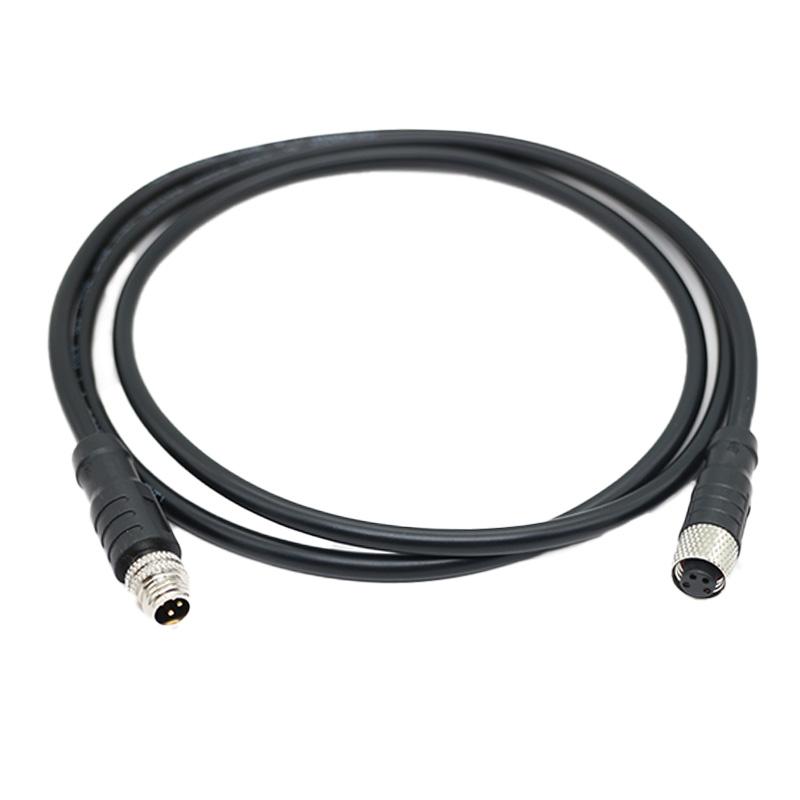
For a custom M12 lead, send the supplier a sketch of the desired pack and describe where it will be opened. Approve the arrangement with an actual finished sample, then keep that packing instruction with the order. The useful outcome is a cable that can move from carton to workbench in a controlled, repeatable sequence.
Handling background: TE Connectivity MONOPLUG application specification, handling section; LAPP on cable loads and bending. Use the selected assembly's instructions to settle its packing limits.



 Tel: +8619924482730
 Email: info@kmydconnector.com
 MP/WhatsApp: +8619924482730
 Manufacturer Address:Baoan District, Shenzhen City, Guangdong Province,China