MS3116 Connectors Catalog with Specifications and Ratings
M23 Connectors for Robotic Joint Power and Signal Transmission
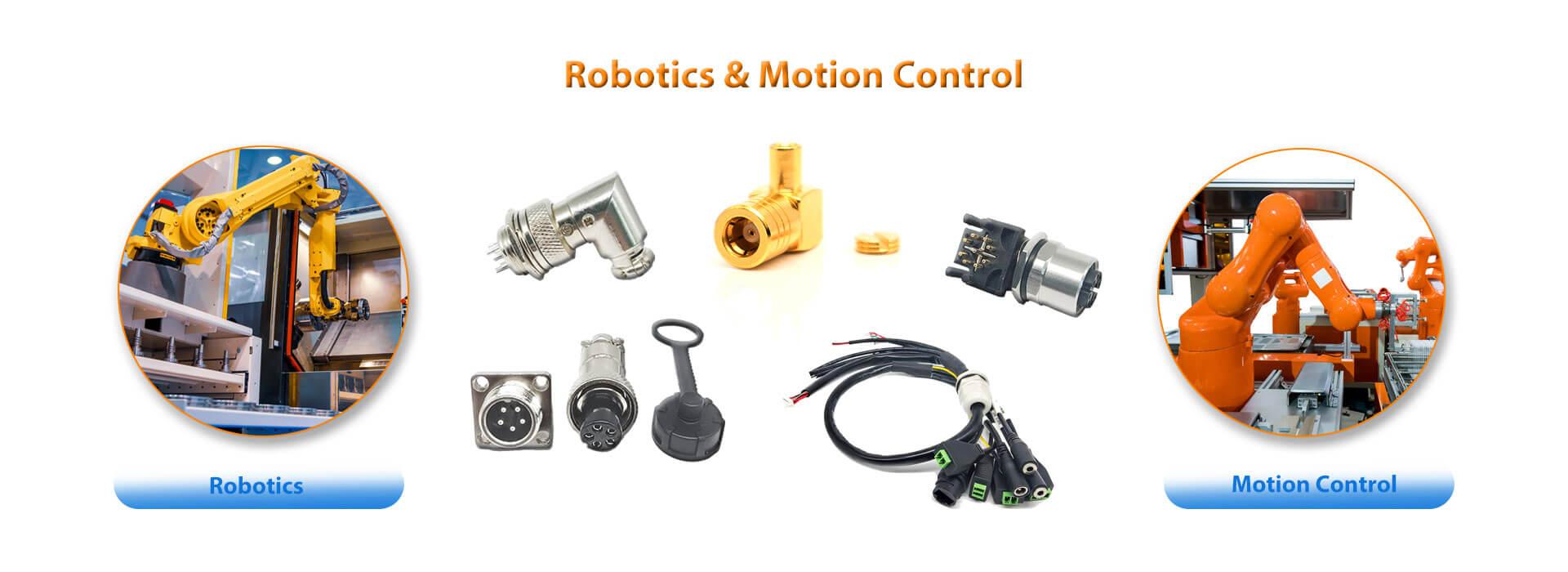
Robotic joint connections demand a connector that maintains signal integrity and power delivery under continuous motion, high vibration, and exposure to industrial contaminants. The M23 connector serves as a critical interface for servo motors, encoders, and control systems in industrial arms, collaborative robots, and automated machinery. With IP67/IP68 protection ratings, these connectors support stable operation on manufacturing floors, at welding stations, and in cleanroom environments where mechanical stress and harsh conditions are constant factors.
Interface and Environmental Requirements for Robotic Joints
In robotic joint applications, the connector interface must withstand repeated flexing, torque, and temperature fluctuations without compromising electrical performance. The M23 series addresses these demands through a robust threaded coupling mechanism that resists loosening under vibration and a sealed housing that prevents ingress of dust, coolant, and moisture. Engineers selecting connectors for robotic joints should verify the mating cycle rating, cable strain relief capacity, and the specific IP rating required for the application environment—whether a dry cleanroom or a wet machining area.
Electrical and Mechanical Configuration
The M23 connector supports a range of pin configurations for combined power and signal transmission, enabling a single connection point for motor power, encoder feedback, and brake control lines. This reduces wiring complexity in the robotic arm and simplifies maintenance. When specifying a connector, confirm the current and voltage ratings against the servo motor load, the contact resistance for signal integrity, and the cable diameter range to ensure a proper seal and strain relief fit.
Verification and Installation Considerations
Before deployment, validate the connector's performance through sample testing that simulates the robotic joint's motion profile and environmental exposure. Confirm the mating torque, the locking mechanism's durability over repeated cycles, and the connector's compatibility with the specified cable type. During installation, ensure that the connector is properly torqued and that the cable is secured to prevent stress on the termination points.
Related Resources for Robotic Connector Selection
For further guidance on connector selection for robotic systems, review the GX16 connectors for industrial robot servo motors or the MS5015 military standard connectors for industrial robot arms to compare interface options. For a broader reference, consult the MS3116 connectors catalog with specifications and ratings.
To discuss your specific robotic joint connection requirements, including pin configuration, cable assembly, and environmental sealing needs, please use the inquiry form or contact our engineering team for application support.




 Tel: +8619924482730
 Email: info@kmydconnector.com
 MP/WhatsApp: +8619924482730
 Manufacturer Address:Baoan District, Shenzhen City, Guangdong Province,China