RF Connector Types, Materials, and Electrical Specs
Tram Safety & Efficiency: The Role of Threaded Connectors
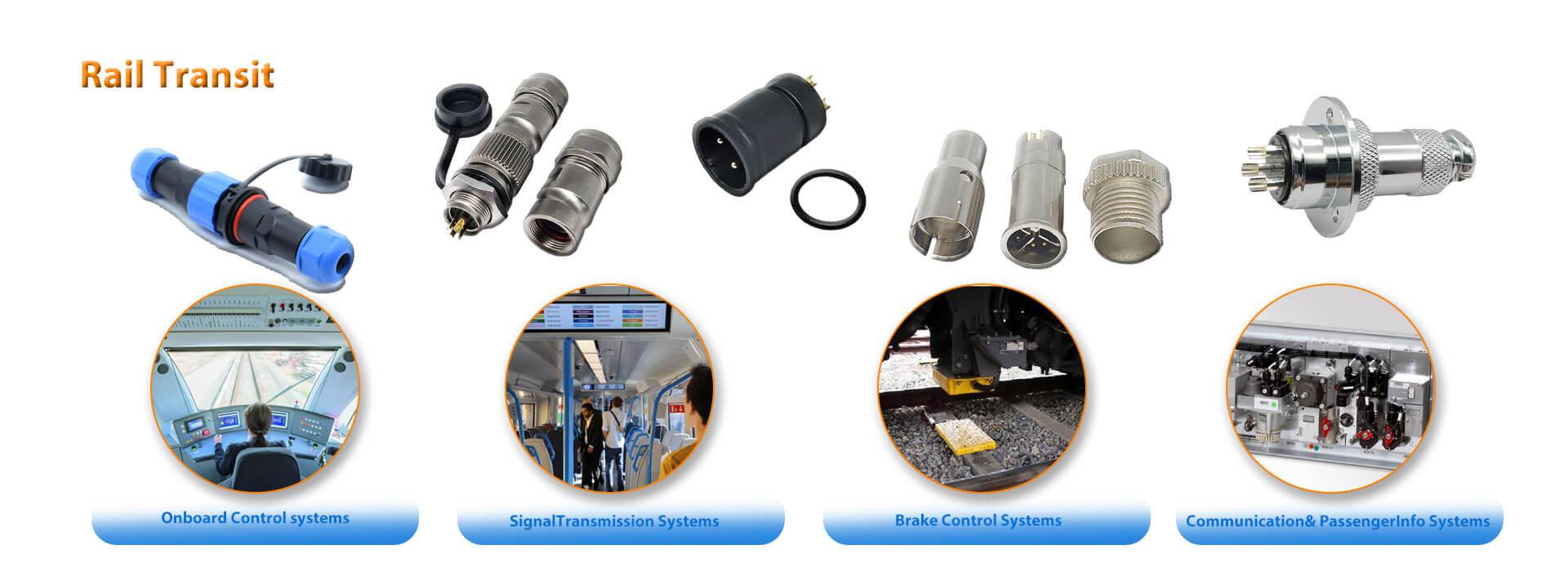
Modern tram systems depend on uninterrupted electrical power and signal transmission for propulsion, lighting, and onboard control networks. Any connection failure in these systems can lead to service delays, safety risks, or costly maintenance. Threaded connectors are widely specified in tram electrical systems because their coupling mechanism resists vibration, shock, and moisture ingress—conditions that are common in urban rail environments.
This page explains how threaded connectors support tram safety and operational efficiency, what electrical and environmental requirements they must meet, and how to evaluate a connector solution for rail applications.
Why Threaded Coupling Matters in Tram Applications
Threaded connectors provide a mechanical lock between plug and socket that prevents accidental disconnection under vibration and mechanical stress. In a tram, this is critical for:
-
Propulsion systems – high-current connections must remain stable during acceleration and braking.
-
Lighting circuits – interior and exterior lighting require reliable power distribution.
-
Control and signaling – low-voltage signals must be transmitted without intermittent contact.
The threaded interface also improves sealing performance. When properly mated, the connector can maintain a higher degree of protection against moisture, dust, and humidity compared to non-locking alternatives. This is especially relevant for underfloor installations, door mechanisms, and external lighting where exposure to water spray and temperature variation is common.
Key Electrical and Environmental Requirements
When selecting a threaded connector for tram systems, the following parameters should be verified against the actual application:
-
Rated current and voltage – must match the load of the connected equipment, including inrush conditions.
-
Contact resistance – low and stable contact resistance reduces heat generation and power loss.
-
IP rating – the connector should be rated for the installation location, considering water spray, humidity, and cleaning procedures.
-
Temperature range – the connector must operate reliably across the ambient temperature range of the tram environment.
-
Mating cycles – connectors used in maintenance access points should withstand repeated connection and disconnection.
-
Cable range and termination – the connector must accept the specified cable cross-section and support the chosen termination method (crimp, screw, or solder).
It is important to note that the IP rating of a threaded connector is typically valid only when the connector is fully mated and locked. Unmated connectors or partially engaged couplings do not provide the same level of protection.
Connector Configuration and Installation Considerations
Threaded connectors are available in multiple configurations, and the correct choice depends on the mounting style and cable entry direction:
-
Cable-to-cable connections – used for extending cable runs or connecting pre-assembled harnesses.
-
Panel-mount receptacles – fixed to equipment enclosures or junction boxes, providing a stable interface for field wiring.
-
Straight or angled versions – angled connectors help manage cable routing in confined spaces.
During installation, the mating torque should be applied according to the manufacturer's specification. Over-tightening can damage the sealing elements or threads, while under-tightening may reduce the sealing performance and vibration resistance. For field-wireable versions, the cable gland must be correctly assembled to maintain the rated IP protection.
Verification and Quality Evidence
For rail applications, connector performance should be verified through documented testing. Relevant evidence includes:
- Mechanical tests for vibration and shock resistance.
- Electrical tests for contact resistance and insulation resistance.
- Environmental tests for temperature cycling and humidity exposure.
- Sealing tests to confirm the IP rating under specified conditions.
If specific test data is not available for a particular connector series, it is recommended to request the manufacturer's test report or qualification documentation before specifying the connector for a safety-related tram system.
Related Connector Solutions
For engineers evaluating connector options for rail or industrial control systems, the following resources provide additional technical background:
-
Aviation Plug Connectors – a connector family that includes threaded coupling options suitable for demanding environments.
-
RF Connector Types, Materials, and Electrical Specs – a technical overview of connector materials and electrical characteristics that supports selection decisions.
Next Step: Inquiry and Selection Support
To confirm whether a specific threaded connector meets your tram application requirements, prepare the following information before contacting our team:
- Operating voltage and continuous current of the connected load.
- Number of contacts and required pin configuration.
- Cable type, conductor cross-section, and outer diameter.
- Mounting style (cable-to-cable, panel mount, or PCB).
- Required IP rating and ambient temperature range.
- Expected number of mating cycles during service life.
Submit your inquiry through the form on this page or contact us via WhatsApp to discuss your project requirements with our engineering team.






 Tel: +8619924482730
 Email: info@kmydconnector.com
 MP/WhatsApp: +8619924482730
 Manufacturer Address:Baoan District, Shenzhen City, Guangdong Province,China