LD20/SP20 Heavy-Duty Square Connector
Application Background
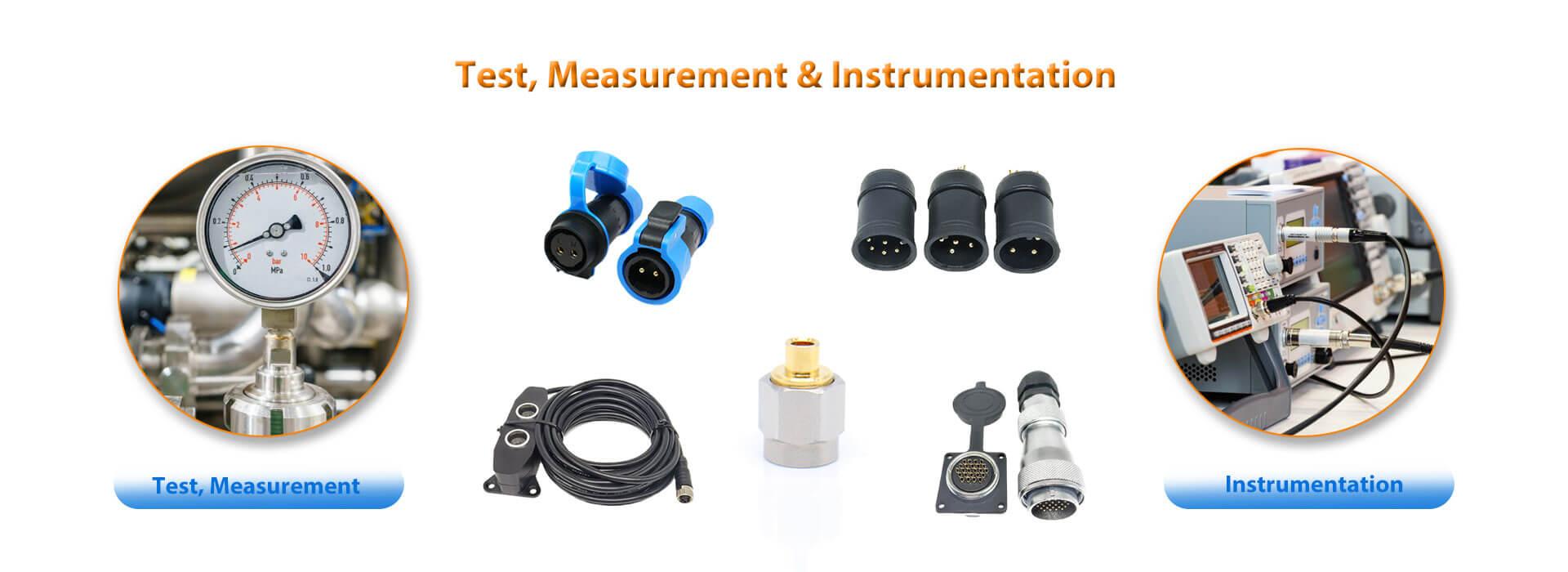
Laboratory test and measurement equipment, such as oscilloscopes and signal generators, requires stable and repeatable signal connections for accurate testing and analysis. In the United States, R&D laboratories, university research facilities, and electronics validation centers rely on these instruments for waveform analysis, frequency response testing, and signal integrity verification. The BNC interface remains a widely adopted standard for these measurement tasks due to its predictable electrical behavior and mechanical simplicity.

Connector Application
BNC connectors are commonly used for signal interfaces in test equipment. Typical applications include:
- Signal input/output ports on oscilloscopes
- Connections between signal generators and test devices
- Measurement probes and test leads
- Frequency counters and spectrum analyzers
- Impedance-matched coaxial test setups
These connectors support 50 Ω and 75 Ω impedance systems, making them suitable for a broad range of laboratory instruments where controlled impedance is critical for measurement accuracy.
Design Characteristics
BNC connectors use a bayonet locking mechanism for quick connection and disconnection. This design provides a secure mating interface while allowing rapid cable changes during test setup. The connectors are engineered for consistent impedance and reliable signal transmission, with a typical frequency range extending to several gigahertz depending on the specific connector grade and cable assembly quality.
Key design features include:
- Bayonet coupling for fast, tool-free mating
- Coaxial construction for controlled characteristic impedance
- Durable metal shell for repeated mating cycles
- Compatibility with standard RG-series coaxial cables
Operational Considerations
Laboratory environments require connectors that support frequent use and stable signal performance. When selecting BNC connectors for test equipment, engineers should consider the following factors:
- Impedance rating must match the instrument and cable specification
- Mating cycle rating should align with expected test frequency
- Cable type and termination method affect signal integrity
- Contact plating influences long-term reliability and contact resistance
For applications requiring higher density or different locking mechanisms, alternative connector families such as Aviation Plug Connectors may be considered, though BNC remains the standard choice for general-purpose laboratory signal connections. For signal generator output interfaces that demand low distortion, specific connector selection criteria apply; see Which connector is suitable for signal generator output interfaces that require low distortion? for guidance.
Conclusion
BNC connectors provide a practical and reliable solution for signal connections in laboratory measurement equipment. Their bayonet locking design, controlled impedance characteristics, and widespread industry acceptance make them a dependable choice for oscilloscopes, signal generators, and related test instruments in professional laboratory settings across the United States.
For detailed specifications and configuration options, please consult the Download Product Catalog or contact our engineering team with your specific interface requirements.






 Tel: +8619924482730
 Email: info@kmydconnector.com
 MP/WhatsApp: +8619924482730
 Manufacturer Address:Baoan District, Shenzhen City, Guangdong Province,China