SF Series Aviation Connectors Specifications and Performance Data
Coaxial Connectors in Radar Signal Processing Equipment
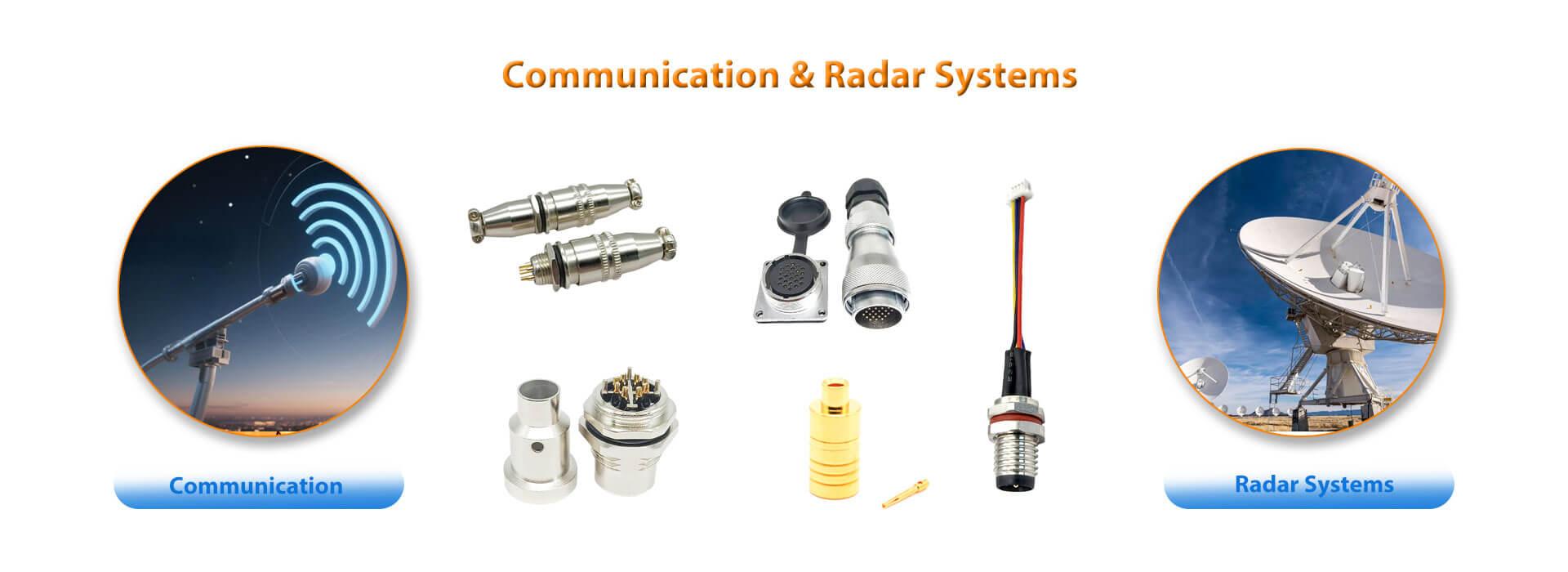
Coaxial connectors are essential components in radar signal processing equipment, where they transfer RF signals between critical modules such as receivers, transmitters, and filters. Their primary role is to maintain signal integrity across the system, ensuring that high-frequency transmissions are delivered with minimal loss and distortion.
Selection Criteria for RF Signal Integrity
The selection of coaxial connectors for this application is driven by two key performance factors: frequency response and shielding effectiveness. These parameters directly influence the connector's ability to preserve signal stability in demanding communication and radar environments.
-
Frequency Performance: The connector must support the specific operating band of the radar system, with controlled impedance to minimize reflections and return loss.
-
Shielding Effectiveness: Robust shielding is required to prevent electromagnetic interference (EMI) from degrading the sensitive RF signals, particularly in dense electronic assemblies.
-
Mechanical Fit: The connector's interface and mounting style must align with the module's layout to ensure reliable mating and long-term durability.
Application Context and Environmental Fit
In radar signal processing, connectors are often located within enclosed electronic cabinets or on modular boards. The operating environment typically involves controlled temperature and humidity, but the connectors must still offer consistent performance over repeated mating cycles and resist vibration. For applications requiring higher durability or specific interface standards, engineers may evaluate alternative series such as the SF Series Aviation Connectors Specifications and Performance Data for their robust construction and verified electrical characteristics.
Verification and Performance Notes
While the specific electrical load values (e.g., voltage, current, and impedance ratings) for this installation are not detailed in the source material, the selection rationale emphasizes the need for connectors that provide stable RF transmission and effective shielding. For projects with defined frequency bands or power levels, it is recommended to confirm the connector's datasheet parameters against the system's requirements before finalizing the design.
For further guidance on connector selection in RF and communication systems, refer to related resources on RJ45 Connectors in Radar Data Transmission Systems to understand how interface choices impact overall signal chain performance.




 Tel: +8619924482730
 Email: info@kmydconnector.com
 MP/WhatsApp: +8619924482730
 Manufacturer Address:Baoan District, Shenzhen City, Guangdong Province,China