MS5015 Connector Types, Configurations & Specifications
Why BNC RF Connectors Are a Standard Choice for Broadcast and Test Equipment
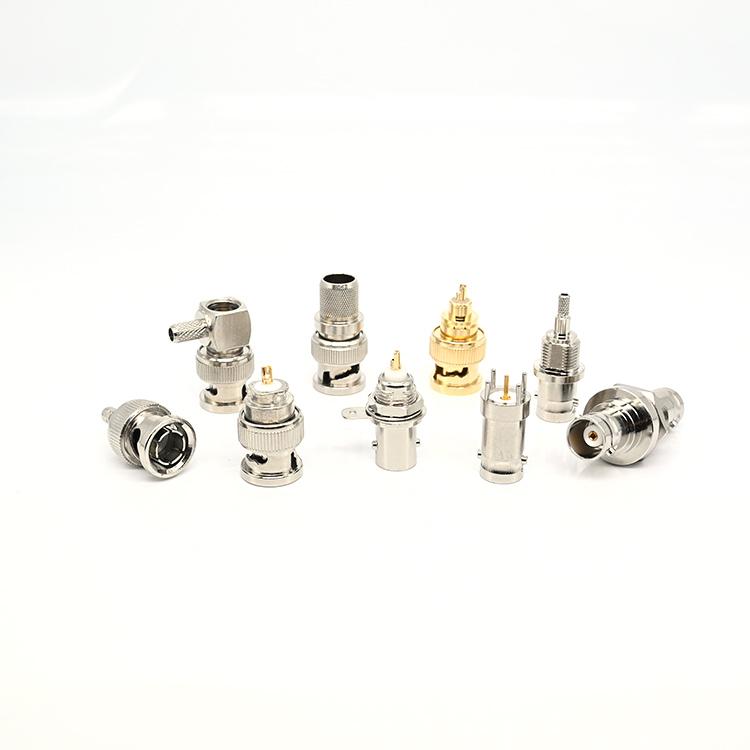
BNC RF connectors are widely used in broadcast, test, and measurement applications because they combine quick connect and disconnect operation with a secure bayonet-style coupling. This design allows engineers and technicians to set up or reconfigure equipment rapidly without tools, which is essential in production environments where downtime directly affects workflow.
These connectors support low and medium-frequency systems and are available in a range of sizes and configurations to match common coaxial cables and equipment interfaces. Their mechanical simplicity and repeatable mating behavior make them a practical option for both permanent installations and temporary test setups.
Key Decision Points When Selecting BNC Connectors
To choose the right BNC connector for your application, consider the following factors:
-
Frequency range: Confirm that the connector's rated frequency matches your signal requirements, especially for broadcast or test equipment operating near the upper limit.
-
Impedance: Verify the characteristic impedance (typically 50 Ω or 75 Ω) matches your cable and system to avoid signal reflection.
-
Coupling mechanism: The bayonet-style lock provides fast mating and unmating, but ensure the connector is rated for the number of mating cycles your application requires.
-
Cable compatibility: Check the connector's accepted cable diameter and dielectric size to ensure a proper fit and reliable termination.
-
Environmental exposure: For outdoor or industrial use, confirm the connector's material and plating suit the operating environment, including moisture and temperature conditions.
Where BNC Connectors Fit Best
BNC connectors are commonly used in CCTV surveillance systems, broadcast video equipment, and laboratory test instruments. Their tool-free coupling reduces setup time, while the secure lock prevents accidental disconnection during operation. For applications requiring weatherproof performance or threaded coupling, consider alternative RF connector types such as TNC connectors.
Installation and Maintenance Considerations
Proper termination is critical for consistent signal performance. Follow the manufacturer's recommended crimp or solder procedure for the specific cable and connector combination. Inspect connectors periodically for wear, especially in high-mating-cycle applications, and replace damaged components to maintain signal integrity.
Next Step: Confirm Your Connector Requirements
Before ordering, verify your system's impedance, frequency range, and cable type. If you need assistance selecting the correct BNC connector for your broadcast or test equipment, contact our team with your application details. For related guidance, see our article on BNC versus SMA connectors for oscilloscope probe connections.



 Tel: +8619924482730
 Email: info@kmydconnector.com
 MP/WhatsApp: +8619924482730
 Manufacturer Address:Baoan District, Shenzhen City, Guangdong Province,China