LD20/SP20 Industrial Flange Connector Dimensions and Specs
Why Material Selection Determines DIN Connector Reliability
When specifying a DIN connector for industrial equipment, housing and contact materials are not just a bill-of-materials detail. They directly determine performance under vibration, humidity, temperature swings, and repeated mating cycles. This article explains the material choices that support long-term electrical stability and helps you compare them against lower-cost alternatives.
Housing: Nickel-Plated Brass for Corrosion and Shielding
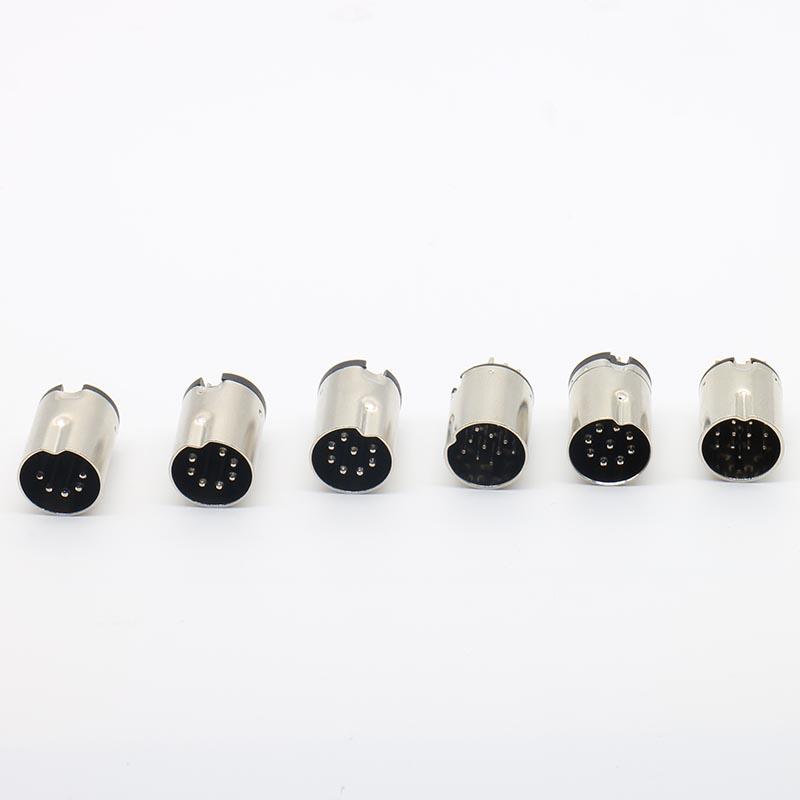
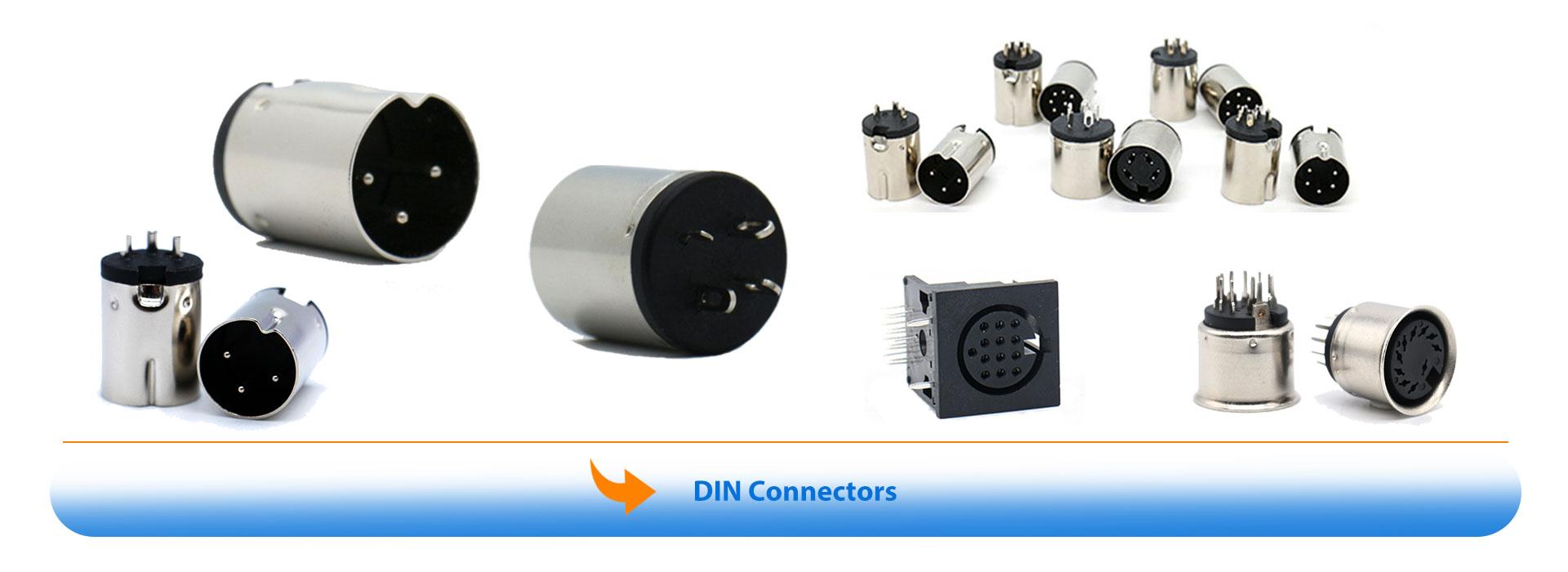
These DIN connectors use a precision-crafted housing made from nickel-plated brass. The dense, uniform nickel coating provides three practical benefits for industrial installations:
-
Corrosion and rust resistance: The plating protects the base metal from moisture and airborne contaminants, reducing the risk of surface degradation in humid or dusty environments.
-
Abrasion protection: A harder surface layer helps the housing withstand physical wear during installation, cable strain, and maintenance handling.
-
Electromagnetic shielding: The conductive nickel layer contributes to effective shielding, which is useful in environments with electrical noise or high-frequency interference.
This combination makes the housing suitable for demanding conditions, including high-frequency vibration, humidity, and dust exposure.
Contacts: Gold-Plated Brass for Stable Signal Transmission
All terminals in these DIN connectors are made from gold-plated brass. The material choice targets the two factors that most affect signal integrity over time:
-
Low contact resistance: Gold plating maintains excellent conductivity at the mating interface, helping to keep voltage drop and signal loss minimal.
-
Oxidation resistance: Unlike untreated brass, gold plating resists surface oxidation that can degrade contact quality after extended service.
This combination supports stable signal transmission without the gradual degradation that can occur with lower-grade contact materials.
Comparison: What Happens with Unplated Materials
Some manufacturers use unplated brass housings and untreated brass terminals to reduce cost. Over time, these materials are more prone to:
- Rust and deformation of the housing, which can compromise mating alignment and sealing.
- Oxidation on the terminals, leading to increased contact resistance and intermittent or poor electrical contact.
These issues often surface only after the connector is in service, making them harder to diagnose and more expensive to fix than a material upgrade at the specification stage.
What This Means for Your Next Purchase Decision
When evaluating DIN connectors for your application, ask your supplier to confirm the exact plating materials and thickness for both housing and contacts. Verify that the connector series you choose matches your environmental conditions, such as humidity, vibration levels, and required shielding performance. If you are comparing multiple suppliers, request material specifications in writing rather than relying on general claims of durability.
For a deeper look at how material choices affect performance in a specific series, see our DIN connectors with gold-plated contacts for 10Gbps transmission. If you are working on a solenoid valve or similar automation application, this DIN connector feature article shows how material and design choices hold up in real industrial use.



 Tel: +8619924482730
 Email: info@kmydconnector.com
 MP/WhatsApp: +8619924482730
 Manufacturer Address:Baoan District, Shenzhen City, Guangdong Province,China