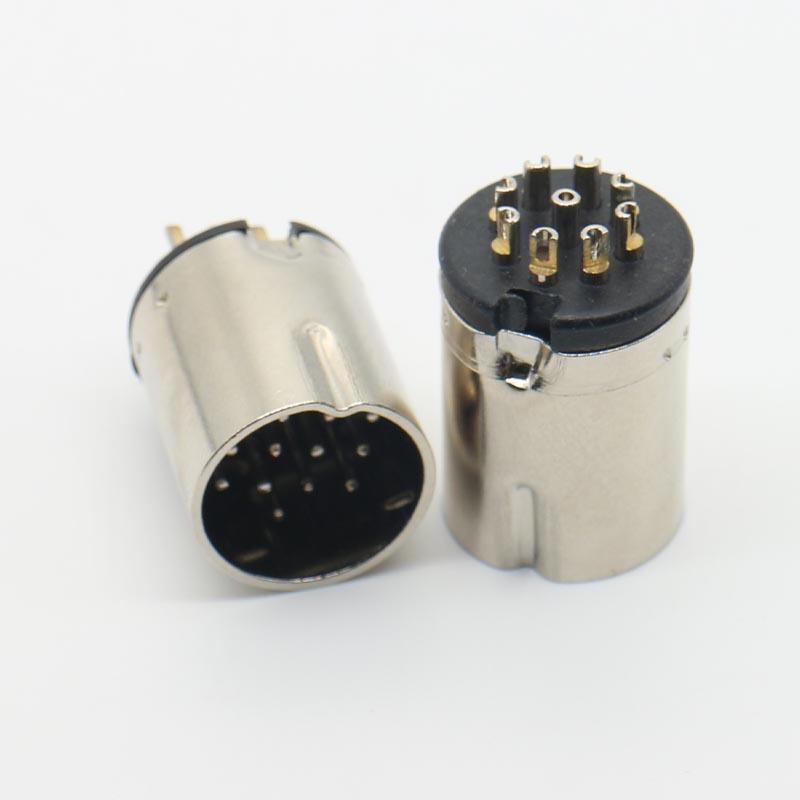
GOST OHS Circular Connector with Multiple Core Count Options
Why Signal Integrity Matters in DIN Connector Selection
When you are designing or maintaining equipment that relies on multi-core synchronous data exchange, the connector is often the weakest link in the signal path. A poor connection can introduce latency, packet loss, or intermittent failures that are difficult to trace. This article explains the transmission performance of our DIN connectors, focusing on the engineering choices that reduce signal loss and support high-speed data transfer.
Key Performance Factors That Reduce Signal Loss
Our DIN connectors are engineered to maintain signal integrity through several verified design decisions. The following points summarize the core advantages you can expect:
-
Gold-plated contacts: The contacts use a gold-plating process, achieving a contact resistance of ≤20mΩ. This reduces signal loss by 30% compared to nickel-plated alternatives.
-
Optimized internal wiring layout: The internal structure is designed to support high-speed data transmission up to 10Gbps, meeting the demands of multi-core synchronous data exchange.
-
Electromagnetic interference (EMI) resistance: The product operates stably in complex electromagnetic environments without latency or packet loss.
-
Extended mating durability: With a mating durability of up to 10,000 cycles—far exceeding the industry standard of 5,000 cycles—the connector ensures consistent transmission reliability throughout its service life.
Interpreting the Electrical and Mechanical Specifications
To make an informed decision, it helps to understand what these values mean in practice. The contact resistance of ≤20mΩ is a measure of the resistance at the mating interface; lower values mean less energy is lost as heat and more signal is preserved. The 10Gbps data rate is a rated capability, so verify that your cable assembly and system backplane also support this speed to achieve the full performance. Similarly, the 10,000-cycle durability rating assumes proper mating and unmating procedures; repeated misalignment or contamination can reduce this figure.
Application Fit and Installation Considerations
These DIN connectors are suitable for applications where reliable, high-speed signal transfer is critical, such as industrial automation, data acquisition, and control systems. However, they are not a universal solution. Confirm that your required pin count, mounting style (cable or panel mount), and environmental protection level (e.g., IP rating) match the specific connector series you are evaluating. For installation, follow the recommended torque and mating procedures to preserve the gold plating and maintain the low contact resistance over time.
Next Steps for Your Project
If you are comparing DIN connectors for a new design or replacing an existing component, start by reviewing your system's electrical and mechanical requirements against the specifications above. For a deeper look at how these connectors are built for reliability, you can review our 100% inspected DIN connectors or explore the aviation plug connector range for other high-performance options. When you are ready, contact our engineering team with your pin count, data rate, and environmental requirements to confirm the best match for your application.



 Tel: +8619924482730
 Email: info@kmydconnector.com
 MP/WhatsApp: +8619924482730
 Manufacturer Address:Baoan District, Shenzhen City, Guangdong Province,China