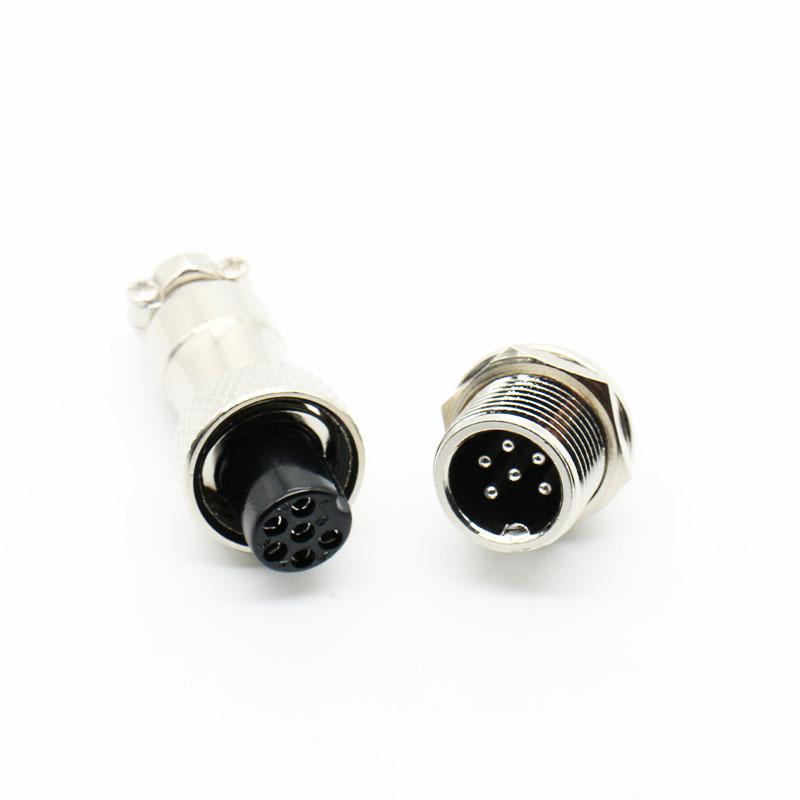
12G Aviation Connectors with Multiple Core Count Options
Why GX Connectors Are Built for Extreme Environments
When equipment must keep working in severe cold, high heat, salt spray, or constant vibration, the connector is often the first point of failure. The GX aviation connector series is designed to remove that risk, giving engineers a dependable interface for demanding industrial, marine, and mobile applications.
This guide explains the key performance advantages of the GX series, how it compares with typical industry alternatives, and what to check before specifying it for your project.
Wide Temperature Tolerance for Polar and High-Heat Conditions
The GX series operates reliably across a wide temperature range of -55°C to +125°C. This makes it suitable for equipment exposed to polar cold, desert heat, or high-temperature industrial processes. Many competing connectors are limited to -40°C to 100°C and may experience signal failure or material degradation beyond those limits.
If your application involves outdoor enclosures, engine compartments, or temperature cycling, the GX series provides a wider safety margin for continuous operation.
Corrosion Resistance for Coastal, Marine, and Chemical Environments
Advanced plating and sealing technology allow the GX connectors to pass 72-hour salt spray tests without corrosion. This makes them a practical choice for coastal installations, offshore equipment, chemical processing plants, and other corrosive atmospheres. By comparison, most comparable products only meet 48-hour salt spray standards and are prone to rust over time.
For long-term outdoor or washdown applications, this extended corrosion protection helps reduce maintenance frequency and unplanned downtime.
Vibration and Shock Resistance for Mobile and Industrial Machinery
The GX series withstands 10G vibration and shock, offering approximately 20% greater vibration resistance than standard connectors. This ensures stable electrical contact in high-vibration environments such as vehicles, construction equipment, and rotating machinery. Improved vibration resistance directly contributes to system longevity and reduces the risk of intermittent signal loss.
Key Selection Points for Your Application
-
Temperature range: Confirm your operating ambient and peak temperatures stay within -55°C to +125°C.
-
Corrosion exposure: For coastal or chemical environments, verify the 72-hour salt spray rating matches your expected service life.
-
Vibration levels: Check whether your equipment generates continuous or shock vibration near the 10G rating.
-
Mating interface: Confirm the connector series, pin count, and keying match your existing cable or panel design.
When the GX Series May Not Be the Right Fit
While the GX series is robust, it is not a universal solution. If your application requires a different mating interface, higher pin density, or specific signal protocols, verify compatibility before specifying. The GX series is designed for circular aviation-style connections; other connector families may be more suitable for board-to-board, high-density, or specialized signal applications.
Next Step: Confirm Your Requirements
To evaluate whether the GX series fits your project, prepare your operating temperature, environmental exposure, vibration levels, and required pin count. For more details on the GX20 connector with integrated cable options, see our GX20 aviation connector with integrated cable guide. If you need a broader view of available configurations, review the 12G aviation connectors with multiple core count options.
Contact our team with your application details to confirm the correct connector series, termination method, and sealing options for your environment.



 Tel: +8619924482730
 Email: info@kmydconnector.com
 MP/WhatsApp: +8619924482730
 Manufacturer Address:Baoan District, Shenzhen City, Guangdong Province,China