PT Series Connectors Catalog Types, Ratings, Termination
Preventing Connector Loosening on Automotive Chassis Under 15g Vibration
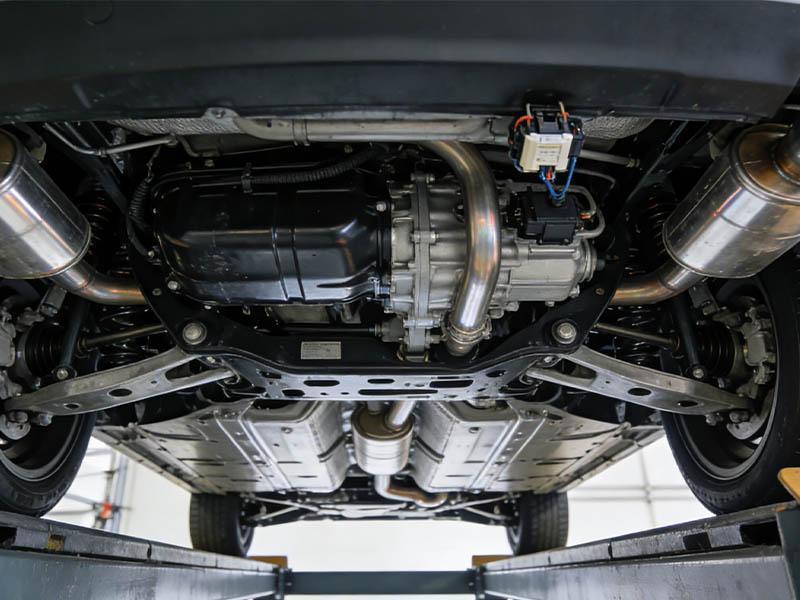
When a connector is mounted on an automotive chassis, long-term vibration at 15g can gradually back off standard locking mechanisms, leading to intermittent signal loss or power failure. The primary decision is not just choosing a "waterproof" or "heavy-duty" connector, but selecting one with a locking method and contact design specifically engineered for continuous mechanical shock.
Recommended Solution: WS Series with Threaded Locking
For this application, the WS series aviation connectors are a suitable choice. They feature a threaded coupling mechanism combined with anti-loosening nuts, which provides a more secure mechanical retention than a simple push-pull or bayonet lock under sustained vibration.
Key Installation Parameter: Torque Specification
To achieve the designed vibration resistance, the anti-loosening nuts must be tightened to a specific torque during installation. The recommended value is 0.8~1.2 N·m. Applying torque below this range may not fully seat the locking mechanism, while exceeding it risks damaging the threads or the connector housing.
Compensating for Vibration-Induced Misalignment
Chassis vibration does not only cause axial loosening; it can also induce lateral movement between the mating connector halves. The WS series addresses this with a floating contact structure that allows up to ±0.5 mm of radial displacement. This tolerance helps maintain a stable electrical connection even when the mounting points shift slightly relative to each other.
Selection Checklist for High-Vibration Environments
-
Locking Type: Confirm the connector uses a threaded coupling or a positive locking mechanism, not a friction-only fit.
-
Torque Control: Ensure your assembly process includes a calibrated torque wrench for the specified 0.8~1.2 N·m range.
-
Contact Float: Verify the connector's datasheet specifies a contact float or misalignment tolerance to handle chassis flex.
-
Environmental Sealing: While vibration is the primary concern, verify the IP rating is adequate for the chassis location (e.g., exposure to water, salt, or dirt).
Application Boundaries
This solution is intended for chassis-mounted connections where the mating halves are physically supported. It is not a substitute for strain relief on heavy cable runs; ensure the cable is independently clamped to prevent the weight of the harness from pulling on the connector body. For applications involving repeated mating/unmating cycles, verify the thread wear characteristics against your maintenance schedule.
For related guidance on connector selection in vehicle environments, see our note on sharing connectors between traditional fuel and new energy vehicles. If your application involves high-speed data transmission on the chassis, you may also review the selection criteria for lidar connectors with 1Gbps rates.
Note: The vibration rating of 15g is an application-specific requirement. Always verify the connector's own shock and vibration test data against your specific mounting location and vibration profile.



 Tel: +8619924482730
 Email: info@kmydconnector.com
 MP/WhatsApp: +8619924482730
 Manufacturer Address:Baoan District, Shenzhen City, Guangdong Province,China