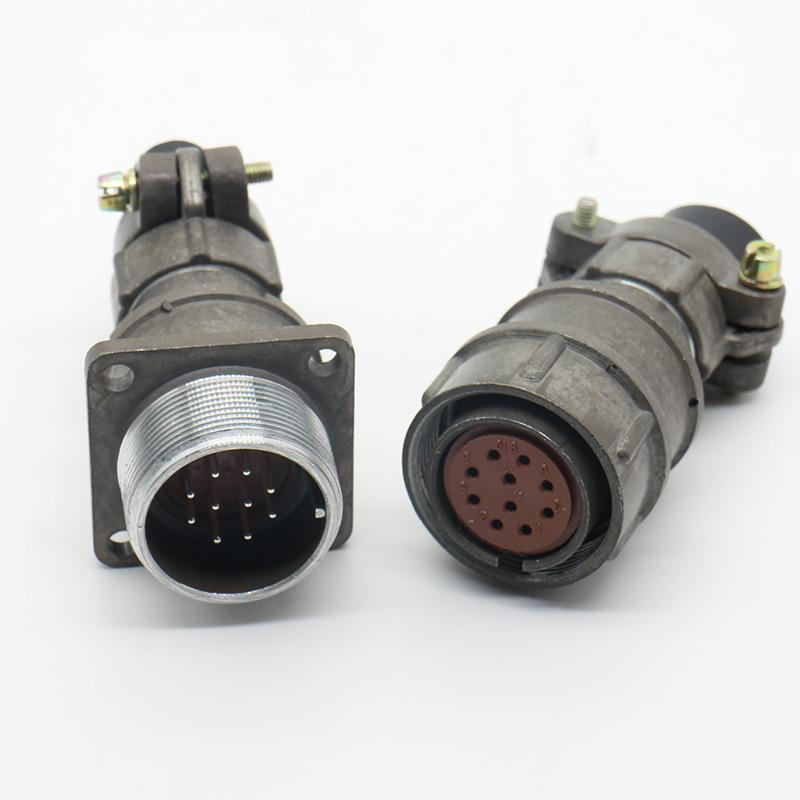
GOST OHS Circular Connector with Multiple Core Count Options
Why Dimensional Consistency Matters in GOST Connector Assembly
When you are integrating circular connectors into a production line, the difference between a smooth assembly process and a costly bottleneck often comes down to manufacturing precision. Our GOST-standard connectors are produced on a standardized semi-automated line, where core steps such as terminal crimping and housing molding are performed mechanically. This approach holds dimensional tolerances within ±0.1mm, delivering the batch-to-batch consistency that lets your team assemble components without repeated adjustments or rework.
This level of control is not just about meeting a drawing. It directly affects how a connector feels when it mates, how much force is required, and whether the contact remains stable over time. For engineers specifying components for critical equipment, these mechanical factors are as important as the electrical ratings on the datasheet.
How Automated Production Reduces Assembly Risk
Mechanical execution of key processes removes much of the variability that can creep into manual assembly. Our production staff receive specialized training in GOST-specific techniques, with a focus on critical parameters like mating force and contact stability. This combination of automated precision and skilled oversight significantly reduces human error.
For your team on the shop floor, the practical benefit is straightforward:
-
Faster installation: Consistent housing dimensions mean connectors align correctly on the first attempt.
-
Reliable mating feel: Uniform contact pressure reduces the risk of intermittent signals.
-
Lower rejection rates: Fewer dimensional deviations translate to less scrap and fewer field failures.
The Hidden Cost of Manual Production Methods
In contrast, some competitors still rely heavily on manual production. This approach often leads to greater dimensional deviation and an inconsistent mating feel across units. In practice, that can surface as jamming during installation or poor contact after a short period of use. These issues do not just slow down your assembly line; they can compromise the long-term operational stability of the equipment you ship.
When evaluating suppliers, it is worth asking how they control these mechanical tolerances and what evidence they can provide for batch consistency. A connector that looks correct on paper but varies in feel from lot to lot can create hidden costs in your own production and warranty claims.
Questions to Ask Before You Specify
To ensure the connectors you select will perform reliably in your application, consider these points during your next supplier review:
- What is the stated dimensional tolerance for the housing and contact interfaces?
- How is mating force controlled and verified during production?
- What training do production staff receive for GOST-specific assembly techniques?
- Can the supplier provide batch-level quality data to back up consistency claims?
If you are currently evaluating connector options for a new project or looking to improve the reliability of an existing line, reviewing these manufacturing details is a practical first step. For a closer look at how these principles apply to specific connector series, you can explore our aviation plug connectors or review a real-world example of panel mount connectors used in battery production lines.



 Tel: +8619924482730
 Email: info@kmydconnector.com
 MP/WhatsApp: +8619924482730
 Manufacturer Address:Baoan District, Shenzhen City, Guangdong Province,China