PT Series Connectors Catalog Types, Ratings, Termination
Selecting a Connector for Industrial Robot Joints
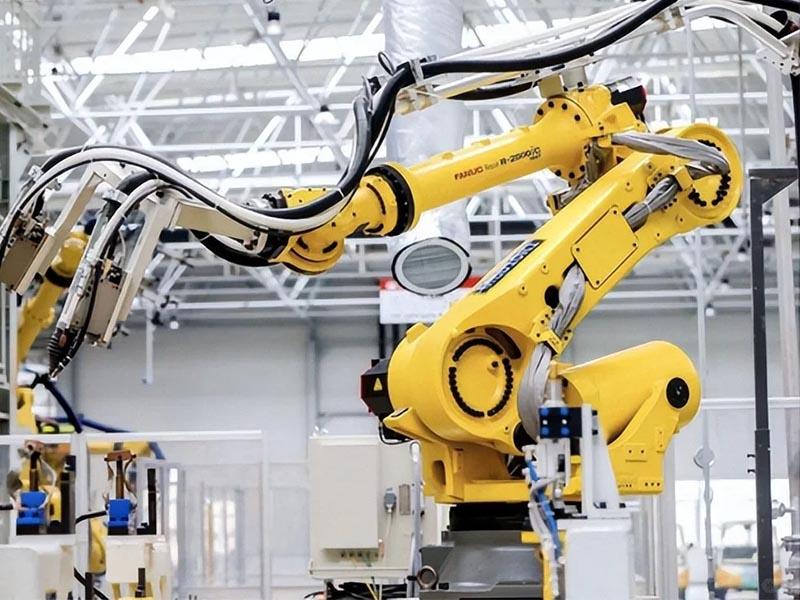
For the demanding environment of industrial robot joints, the push-pull Series B connector is a recommended choice. This connector is engineered to handle the specific mechanical, electrical, and environmental challenges found in robotic applications.
Key Selection Criteria for Robot Joint Connectors
When choosing a connector for this application, engineers should evaluate the following core decision points:
-
Mechanical Durability: The connector must withstand continuous movement and torsion. The Series B offers ±90° torsion resistance, which is suitable for the 360° rotation requirements of robot joints.
-
Mating Force: A low insertion force simplifies assembly and maintenance. The Series B features a plugging force of less than 15N.
-
Signal and Power Integrity: The connector must reliably transmit both power and data. It supports power transmission up to 5A and encoder signals at 100Mbps.
-
Pin Configuration: The connector should offer flexibility for various joint configurations. The Series B is available with 4 to 12 pins.
-
Environmental Protection: Resistance to dust and oil is critical in a workshop environment. The Series B has an IP67 protection rating.
Electrical and Performance Specifications
The electrical characteristics of the connector directly impact the robot's performance and accuracy. The Series B maintains a contact resistance of less than 5mΩ, which is essential for ensuring the robot's repeat positioning accuracy of ±0.005mm. This low resistance helps minimize signal loss and heat generation, contributing to stable and precise operation.
Application Fit and Boundaries
This connector is well-suited for multi-joint robot configurations that require a combination of power and signal transmission in a compact space. While it is designed for high torsion and environmental resistance, the suitability for a specific robot model should be verified against the robot's exact cable routing, joint space constraints, and required mating cycles. For other robotic applications, such as end-effectors or charging ports, different connector series may be more appropriate.
For more information on connector options for robotic systems, you can review our guide on push-pull connectors for robot end effectors or explore the 12G Series circular connectors for alternative industrial applications.
Inquiry Checklist
To ensure you select the correct connector for your project, please have the following information ready when making an inquiry:
- Required number of pins and pin assignment (power vs. signal).
- Operating voltage and current for power pins.
- Data protocol and required transmission speed for signal pins.
- Specific cable outer diameter and wire gauge.
- Required mating cycles and any specific installation torque.
- Environmental conditions, including temperature range and exposure to specific chemicals or coolants.



 Tel: +8619924482730
 Email: info@kmydconnector.com
 MP/WhatsApp: +8619924482730
 Manufacturer Address:Baoan District, Shenzhen City, Guangdong Province,China