MS27472 Military Connector Types and Core Counts
Why N-Type RF Connectors Are Chosen for Harsh Environments
When an RF system must keep working outdoors, in high vibration, or at high power, the N-Type connector is a common engineering answer. Its threaded coupling mechanism locks the interface firmly, which prevents the signal drop and mechanical loosening that can occur with push-on or bayonet designs. For buyers and engineers, the practical question is not just whether the connector is durable, but whether its electrical and mechanical ratings match the specific application.
N-Type connectors are widely used in high-power and outdoor RF applications due to their durability and excellent performance in challenging conditions. Featuring a threaded coupling mechanism, N-Type connectors offer a secure and stable connection even in high-vibration environments. These connectors are ideal for industries like military, aerospace, and broadcasting, where signal clarity and reliability are critical. With their ability to withstand high-frequency signals, they ensure high-quality transmission even in extreme temperatures and harsh weather.
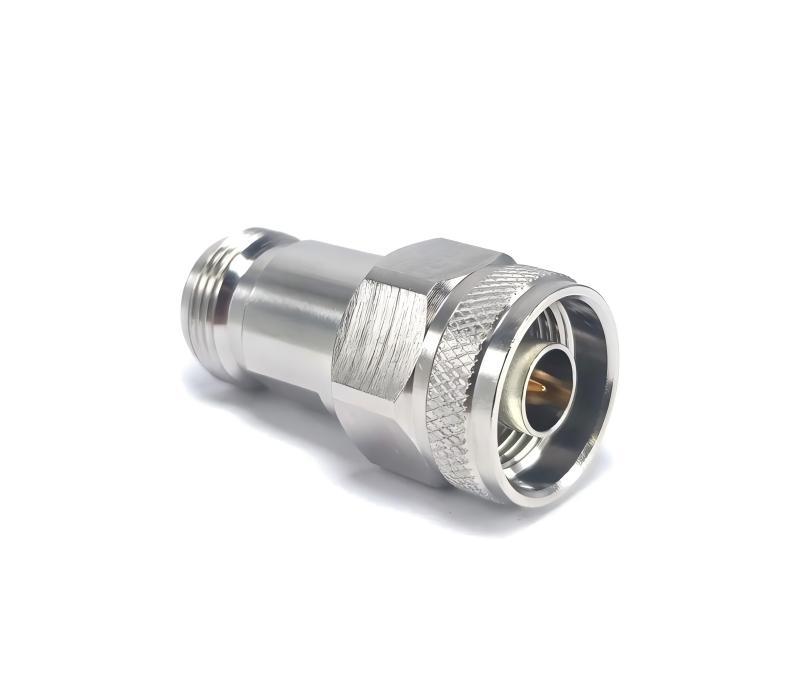
What to Verify Before Selecting an N-Type Connector
Choosing the right N-Type connector depends on the full operating context, not just the series name. Confirm the following points against your system requirements:
-
Frequency range: Verify the connector's rated frequency limit against your signal band. N-Type connectors are commonly used up to 11 GHz, with some versions rated higher, but the exact limit depends on the specific model and construction.
-
Impedance: Standard N-Type connectors are available in 50 ohm and 75 ohm versions. Match the impedance to your cable and equipment to avoid signal reflection.
-
Power handling: Check the continuous power rating at your operating frequency. Power capacity decreases as frequency increases, so use the derated value, not the maximum rating.
-
Environmental protection: Confirm the IP rating and temperature range for your installation site. A weatherproof connector for outdoor use may not be required for an indoor, controlled environment.
-
Termination and mounting: Decide between crimp, clamp, or solder termination, and between cable, panel, or flange mounting, based on your assembly process and mechanical constraints.
Where N-Type Connectors Fit Best
N-Type connectors are a strong fit for base stations, antennas, test equipment, and other systems that demand a stable, weather-resistant RF interface. Their threaded coupling and robust construction make them suitable for installations that experience vibration, temperature swings, or exposure to moisture. However, they are not the lightest or smallest RF connector option. If weight and space are the primary constraints, a smaller connector series may be more appropriate, even if it means accepting a lower power or frequency rating.
Interpreting Performance Ratings Correctly
Rated values for frequency, power, and temperature are measured under controlled conditions. In a real installation, the usable performance depends on cable quality, termination workmanship, mating torque, and the surrounding environment. For example, a connector rated for a certain power level at room temperature may need derating when installed in a hot enclosure or at high altitude. Always compare the rated value with the derated value for your specific operating conditions before finalizing the design.
Next Step: Confirm Your Interface and Application
To move forward, prepare the following details for your connector supplier or engineering team: the required impedance, frequency range, power level, cable type and diameter, mounting style, and the environmental conditions at the installation site. With these parameters, you can verify that the selected N-Type connector matches your system rather than assuming compatibility from the series name alone.



 Tel: +8619924482730
 Email: info@kmydconnector.com
 MP/WhatsApp: +8619924482730
 Manufacturer Address:Baoan District, Shenzhen City, Guangdong Province,China