Din Circular Connector Types and Specifications Guide
Copper Alloy Pins for Circular Connectors: A Buyer's Guide
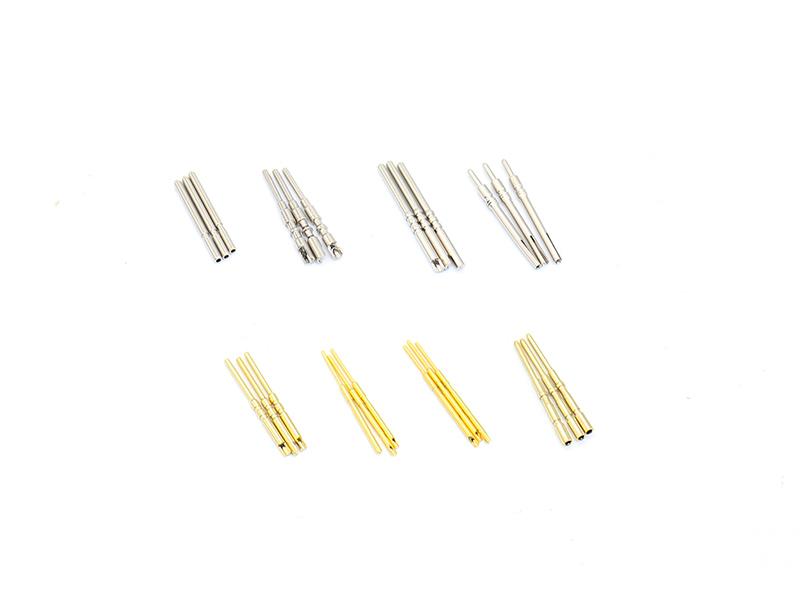
When selecting contact pins for industrial or waterproof circular connectors, the material and plating choice directly affect electrical stability, signal integrity, and long-term reliability. Copper alloy pins are widely used because they balance conductivity, mechanical strength, and cost, making them a practical choice for demanding applications.
This guide explains what to consider when evaluating copper alloy pins, including configuration options, plating choices, and how they perform in real-world environments.
Why Copper Alloy Pins Are the Core of Reliable Connections
Copper alloy pins serve as the primary contact point between mating connector halves. Their job is to maintain a low-resistance path while withstanding repeated mating cycles, vibration, and environmental stress. Compared to pure copper, copper alloys offer improved spring properties and wear resistance, which helps maintain consistent contact pressure over time.
For engineers and procurement teams, the key is matching the pin design to the application's electrical and mechanical requirements rather than assuming one material suits all conditions.
Key Selection Criteria for Copper Alloy Pins
-
Pin configuration: Copper alloy pins are precision-machined to support configurations from 2 to 5 pins and above, so confirm the exact pin count and layout required by your connector housing.
-
Plating options: Gold plating reduces contact resistance and resists corrosion, while tin plating offers a cost-effective alternative for less demanding environments. Choose based on your operating conditions and cycle life expectations.
-
Termination style: Crimp-type pins allow faster field assembly and consistent quality, whereas solder-type pins provide a permanent joint suited to fixed installations.
-
Wire compatibility: Verify the acceptable wire gauge range for each pin size to ensure a secure mechanical and electrical connection.
Plating Choices and Environmental Fit
Optional gold or tin plating plays a significant role in performance. Gold-plated pins are preferred for waterproof connectors used in harsh environments because they maintain low contact resistance even with exposure to moisture and contaminants. Tin plating, while more economical, is generally suitable for drier, less corrosive settings.
If your application involves frequent disconnection, high humidity, or chemical exposure, gold plating is often the safer investment despite the higher unit cost.
Application Boundaries: Where These Pins Work Best
Copper alloy pins are well suited for industrial connector assemblies, medical equipment, and outdoor systems where stable current and signal transmission are required. However, they are not a universal solution. For extremely high-temperature environments or applications requiring very high mating cycles, verify the specific alloy grade and plating thickness with the manufacturer before finalizing your design.
Information to Prepare Before Ordering
To receive accurate matching and avoid delays, have the following details ready when contacting a supplier:
- Connector series and housing part number
- Required pin count and layout drawing
- Wire gauge and insulation diameter
- Termination preference (crimp or solder)
- Plating requirement and environmental conditions
Providing these details helps ensure the pins you receive are compatible with your existing connector assembly and meet your performance expectations.



 Tel: +8619924482730
 Email: info@kmydconnector.com
 MP/WhatsApp: +8619924482730
 Manufacturer Address:Baoan District, Shenzhen City, Guangdong Province,China