SD20/SP20 Flange Connector Size and Material Options
RoHS-Compliant Ni Plating: Meeting Environmental and Safety Standards
In the manufacturing of industrial connectors, surface finishing plays a critical role in both performance and regulatory compliance. Nickel (Ni) plating is widely used to enhance corrosion resistance, wear durability, and solderability. However, the chemical composition of the plating solution directly affects whether a product can meet modern environmental directives. This article explains how a RoHS-compliant Ni plating solution supports cleaner production and safer end-use, and what buyers should verify when sourcing plated components.
Why RoHS Compliance Matters for Connector Finishes
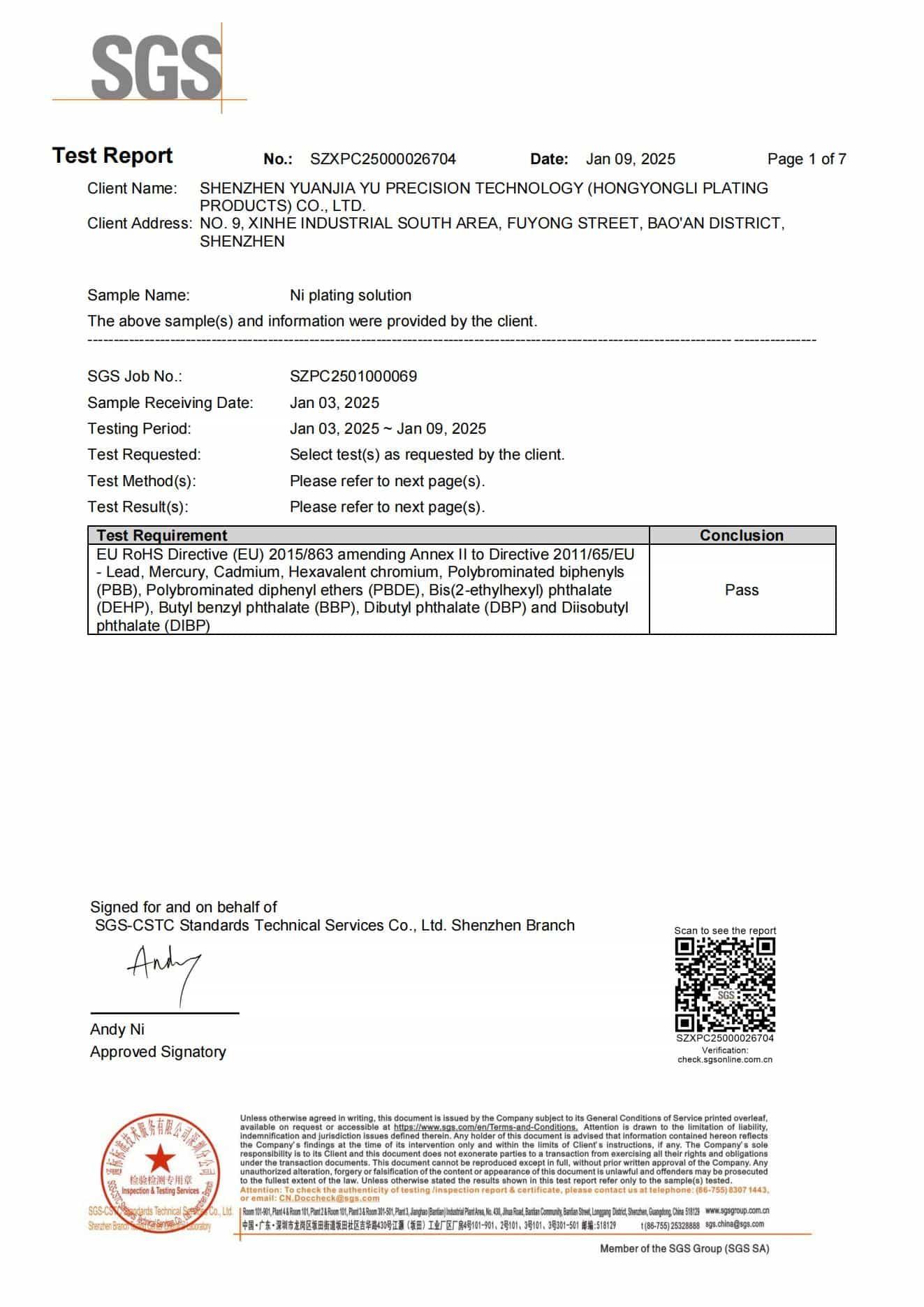
The Restriction of Hazardous Substances (RoHS) directive limits the use of specific hazardous materials in electrical and electronic equipment. For electroplating processes, the key concern is avoiding restricted substances such as lead, cadmium, and hexavalent chromium. A RoHS-compliant Ni plating solution ensures that these substances are not introduced during the plating stage, helping manufacturers deliver products that align with global market access requirements.
Key Benefits of a Compliant Ni Plating Solution
-
Regulatory assurance: Using a tested solution reduces the risk of non-compliance in finished connectors.
-
Consistent plating quality: A controlled chemical bath supports uniform coating thickness and adhesion.
-
Environmental responsibility: Compliant solutions support safer wastewater treatment and reduced hazardous waste.
-
Supply chain confidence: Third-party validation provides documented evidence for audits and customer inquiries.
Verification Through Third-Party Testing
To confirm that the plating solution meets the required restrictions, independent testing is essential. In this case, the solution is rigorously tested and validated by SGS, a recognized inspection and certification body. This verification helps confirm the absence of restricted substances such as lead, cadmium, and hexavalent chromium, providing documented support for compliance claims.
What to Ask When Sourcing Plated Connectors
When evaluating a supplier for nickel-plated connectors, consider the following points:
- Request the RoHS test report for the plating solution and the finished product.
- Confirm which restricted substances were tested and the detection limits used.
- Ask whether the plating process is consistent across production batches.
- Verify that the plating thickness meets your application's corrosion and wear requirements.
Next Step: Discuss Your Plating Requirements
If you are selecting a connector finish for a new project or need to verify compliance for an existing design, our team can provide detailed information about our RoHS-compliant Ni plating process. Contact us with your application details, and we will help you confirm the right surface finish for your requirements.



 Tel: +8619924482730
 Email: info@kmydconnector.com
 MP/WhatsApp: +8619924482730
 Manufacturer Address:Baoan District, Shenzhen City, Guangdong Province,China