WS Series Aviation Connectors Types, Materials, and Specs
Why Material Selection Matters in Aviation Connectors
In demanding industrial environments, the performance and lifespan of a circular connector depend heavily on the materials used in its construction. Buyers evaluating aviation plug connectors need to understand how housing, contact, and insulation materials affect electrical stability, corrosion resistance, and long-term reliability. This guide explains the material choices behind our GX series connectors and how they support consistent performance in harsh conditions.
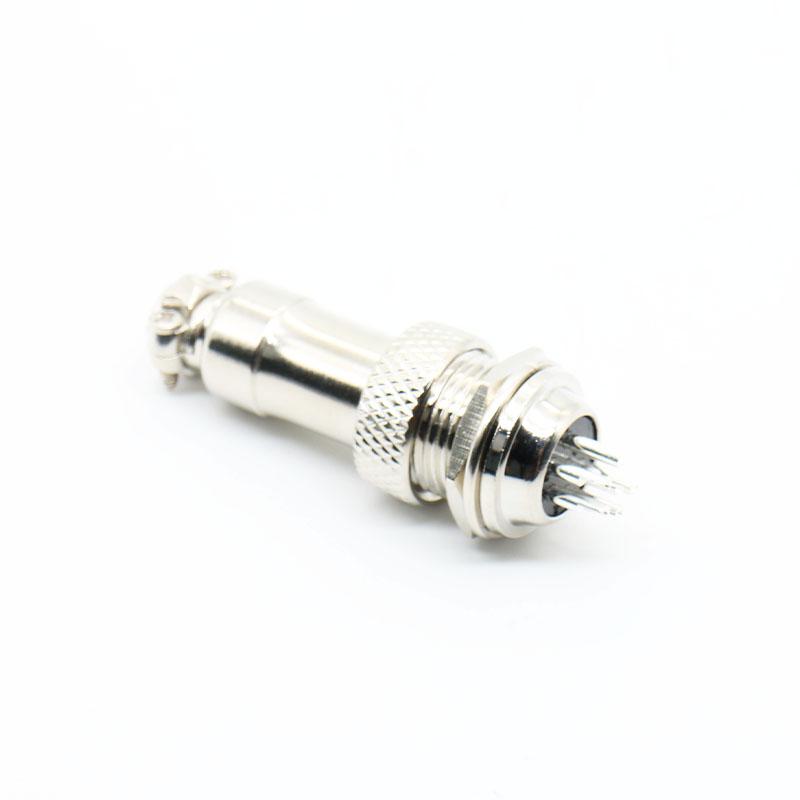
Housing: Nickel-Plated Zinc Alloy for Strength and Shielding
The housing of our GX aviation connectors is crafted from nickel-plated zinc alloy. This material combination provides several practical benefits for industrial applications:
-
High mechanical strength to withstand vibration, impact, and repeated mating cycles.
-
Corrosion resistance that helps protect the connector in humid, salty, or chemically exposed environments.
-
Effective electromagnetic shielding to help maintain signal integrity in electrically noisy settings.
This construction is intended for demanding industrial use where a standard plastic or unprotected metal housing would be more vulnerable to damage or degradation.
Contact Terminals: Gold-Plated or Silver-Plated Brass
Contact reliability is central to connector performance. Our GX series offers two plating options, each suited to different operational priorities:
-
Gold-plated brass: Provides stable performance in extreme conditions with low and consistent contact resistance. This option is well suited for applications where signal integrity and long-term stability are critical.
-
Silver-plated brass: Offers superior conductivity for high-frequency transmission and strong solderability. This is a practical choice for applications that prioritize electrical efficiency and ease of termination.
Choosing between gold and silver plating should be based on your specific electrical requirements, operating environment, and budget constraints.
Insulation: Flame-Retardant Materials for Safety
Insulation in our GX connectors uses flame-retardant phenolic resin or high-performance thermoplastic. These materials are selected to provide lasting electrical insulation and to reduce the risk of fire propagation in the event of overheating or electrical fault. This is an important safety consideration for equipment operating continuously or in high-temperature areas.
Compliance and Traceability
All materials used in our GX aviation connectors comply with RoHS and REACH standards. This means the connectors are manufactured without restricted hazardous substances and meet current environmental and safety regulations. Additionally, materials are fully traceable, supporting quality assurance and helping customers meet their own compliance and auditing requirements.
How Our Material Approach Compares to Cost-Driven Alternatives
Some connectors on the market use unprotected brass or low-grade alloys to reduce cost. While these may appear similar at first glance, they are more prone to corrosion, oxidation, and insulation degradation over time. These issues can lead to intermittent connections, signal loss, or premature failure in the field.
Our GX aviation plugs are precision-engineered with rigorously selected materials and advanced processes. The goal is to provide lasting connection stability, signal integrity, and operational safety, even in environments where cheaper alternatives may struggle.
Selecting the Right Connector for Your Application
When evaluating connectors for your project, consider the following factors:
-
Operating environment: Will the connector face moisture, chemicals, temperature extremes, or mechanical stress?
-
Electrical requirements: What current, voltage, and frequency levels must the connector support?
-
Contact plating: Do you prioritize long-term stability (gold) or high-frequency conductivity (silver)?
-
Compliance needs: Do your end customers require RoHS or REACH documentation?
If you are unsure which material option or connector configuration fits your application, contact our team with your project specifications. We can help you evaluate the trade-offs and select a solution that balances performance, durability, and cost.



 Tel: +8619924482730
 Email: info@kmydconnector.com
 MP/WhatsApp: +8619924482730
 Manufacturer Address:Baoan District, Shenzhen City, Guangdong Province,China